
Volgens de zelfdeterminatietheorie van Ryan en Deci zijn drie psychologische basisbehoeften het fundament onder motivatie. Die basisbehoeften kun je bij jouw leerlingen of studenten op verschillende manieren ondersteunen.
Bijdrage van Anne-Marieke van Loon (Fontys Hogeschool) , Petra Poelmans (Poelmans Onderwijsonderzoek en -advies, Hogeschool Rotterdam, Scalda) , Anje Ros (Fontys Hogeschool) Meer informatie
Gepubliceerd:
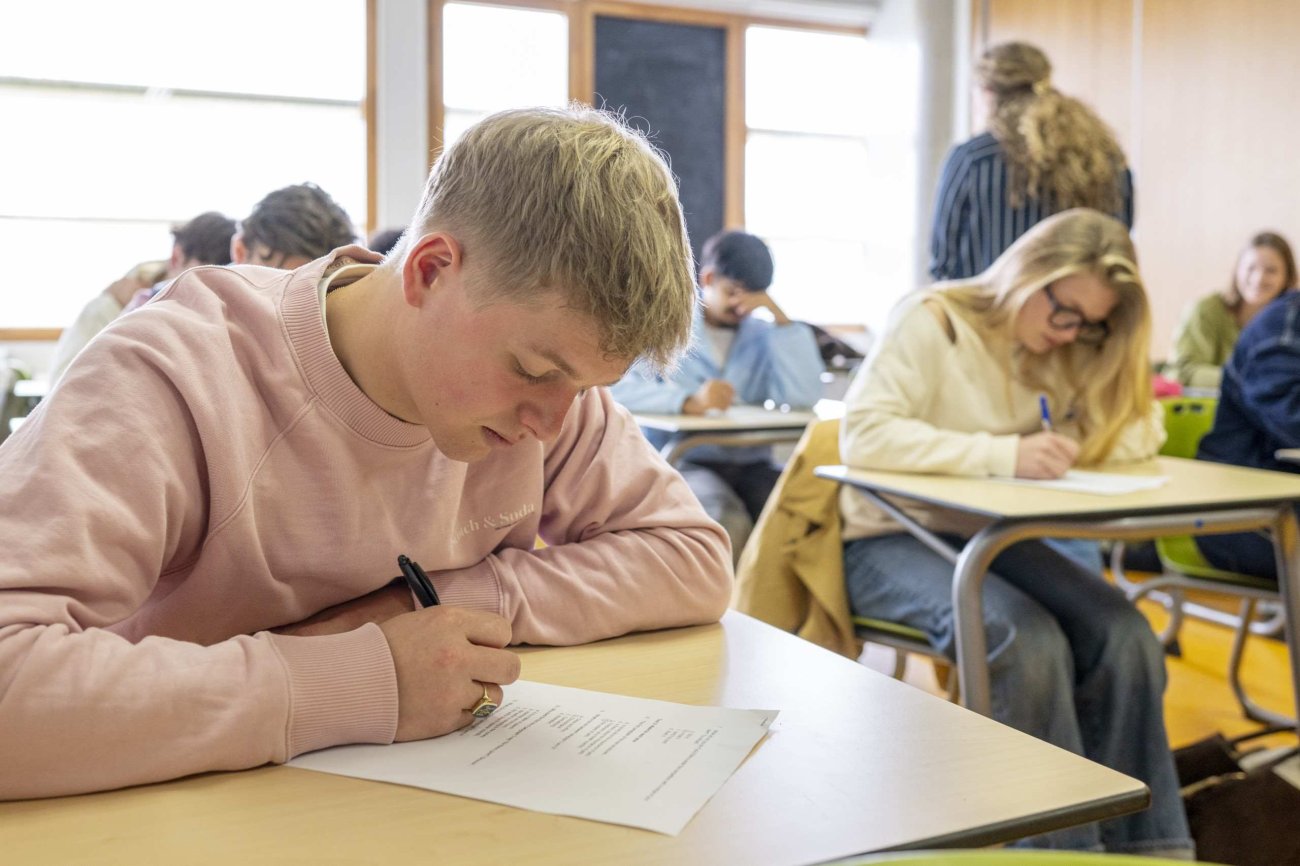
Als docent heb je krachtige middelen in huis om de motivatie van leerlingen te vergroten. In dit artikel bedoelen we met leerlingen zowel leerlingen in het vo als studenten in het mbo. De zelfdeterminatietheorie laat zien dat leerlingen drie basisbehoeften hebben: autonomie, competentie en verbondenheid. Als je in je les elementen integreert die deze drie behoeften voeden, dan werkt dat positief op de motivatie. Denk bijvoorbeeld aan:
- ruimte voor keuze, betekenis en eigenaarschap creëren (autonomie);
- duidelijke doelen, structuur en feedback bieden (competentie);
- veilige en positieve relaties ondersteunen (verbondenheid).
Onderzoek laat zien dat als docenten aandacht besteden aan alle drie basisbehoeften, dat bijdraagt aan motivatie, betrokkenheid en het welbevinden van leerlingen. Ook de leerresultaten kunnen hier baat bij hebben.
Het belang van motivatie
Een leerling begint niet aan zijn opdracht, kijkt steeds op zijn telefoon en geeft na één mislukte poging op. Al snel oordeelt de docent: “hij is niet gemotiveerd”. Maar voor docenten is het van belang om inzicht te krijgen in de redenen voor dit gedrag: weet de leerling het allemaal al wel, is hij afgeleid of vindt hij de taak onbelangrijk of saai? Voor docenten is de vraag van belang waarom een leerling zich wel of niet inspant, om leerlingen tot leren te kunnen aanzetten.
Motivatie speelt een belangrijke rol in het leren en het uitvoeren van taken. Het zet leerlingen in beweging, geeft richting aan wat ze doen en helpt hen om door te zetten, ook als leren lastig is of de taak moeilijk is
Ryan, R. M., & Deci, E. L. (2000). Self-determination theory: The facilitation of intrinsic motivation, social development, and well-being. American Psychologist, 55(1), 68–78. https://doi.org/10.1037/0003-066X.55.1.68
Ryan, R. M., & Deci, E. L. (2017). Self-determination theory: Basic psychological needs in motivation, development, and wellness. Guilford Press. https://doi.org/10.1521/978.14625/28806
In dit overzichtsartikel baseren we ons op de zelfdeterminatietheorie van Ryan en Deci
Ryan, R. M., & Deci, E. L. (2000). Self-determination theory: The facilitation of intrinsic motivation, social development, and well-being. American Psychologist, 55(1), 68–78. https://doi.org/10.1037/0003-066X.55.1.68
Deze theorie over motivatie is zeer veel onderzocht en wordt ook veel toegepast in het onderwijs omdat deze goed onderbouwd is en duidelijke aanknopingspunten biedt voor de praktijk
Ros, A., Castelijns, J., Van Loon, A.-M., & Verbeeck, K. (2020). Gemotiveerd leren en lesgeven: De kracht van intrinsieke motivatie. Uitgeverij Coutinho.
Ryan, R. M., Duineveld, J. J., Di Domenico, S. I., Ryan, W. S., Steward, B. A., & Bradshaw, E. L. (2022). We know this much is (meta-analytically) true: A meta-review of meta-analytic findings evaluating self-determination theory. Psychological Bulletin, 148(11–12), 813–842. https://doi.org/10.1037/bul0000385
Zheng, Z., & Rahimi, N. H. Z. (2025). Understanding the impact of basic psychological needs on academic engagement in vocational education: a literature review based on self-determination theory. Journal of Education and Social Sciences, 31(1).
Maar er zijn ook andere theorieën en invalshoeken, zoals bijvoorbeeld in het onderstaande overzichtsartikel.
Lees ook
Overzichtsartikel over motivatie en het tienerbrein
Veel onderzoek richt zich op de samenhang tussen verschillende vormen van motivatie en uitkomsten zoals leren, presteren en welbevinden. Leerlingen die gemotiveerd zijn, voelen zich vaak beter, leren meer en zijn eerder bereid om moeilijke taken vol te houden
Ryan, R. M., & Deci, E. L. (2017). Self-determination theory: Basic psychological needs in motivation, development, and wellness. Guilford Press. https://doi.org/10.1521/978.14625/28806
Howard, J. L., Bureau, J. S., Guay, F., Chong, J. X. Y., & Ryan, R. M. (2021). Student motivation and associated outcomes: A meta-analysis from self-determination theory. Perspectives on Psychological Science, 16(6), 1300–1323. https://doi.org/10.1177/1745691620966789
Daarnaast hangt motivatie samen met het afnemen van uitval: gemotiveerde leerlingen haken minder snel af en spijbelen minder
Boncquet, M., Soenens, B., Vansteenkiste, M., Beyers, W., & De Bilde, J. (2020). Students’ motivation and academic achievement: The role of psychological need satisfaction and frustration. Journal of Youth and Adolescence, 49, 1–16.
Ook presteren gemotiveerde leerlingen beter op toetsen en examens
Lazowski, R. A., & Hulleman, C. S. (2016). Motivation interventions in education: A meta-analytic review. Review of Educational Research, 86(2), 602–640. https://doi.org/10.3102/0034654315617832
Motivatie en prestaties lijken elkaar te versterken. Longitudinaal onderzoek laat zien dat eerdere prestaties samenhangen met latere motivatie en dat, in mindere mate en afhankelijk van het type motivatie, motivatie samenhangt met latere prestaties (Vu et al., 2024). Dat betekent dat motivatie kan bijdragen aan betere prestaties, maar dat succeservaringen de motivatie sterker beïnvloeden
Vu, T., Magis-Weinberg, L., Jansen, B. R., van Atteveldt, N., Janssen, T. W., Lee, N. C., ... & Meeter, M. (2022). Motivation-achievement cycles in learning: A literature review and research agenda. Educational Psychology Review, 34(1), 39-71. https://doi.org/10.1007/s10648-021-09616-7
Vu, T. V., Scharmer, A. L., van Triest, E., van Atteveldt, N., & Meeter, M. (2024). The reciprocity between various motivation constructs and academic achievement: A systematic review and multilevel meta-analysis of longitudinal studies. Educational Psychology, 44(2), 136–170. https://doi.org/10.1080/01443410.2024.2307960
De sterkte van de relatie tussen motivatie en prestaties is afhankelijk van de aard van de motivatie.
Verschillende soorten motivatie
Binnen de zelfdeterminatietheorie worden verschillende vormen van motivatie onderscheiden die verschillen in de mate waarin leerlingen zelf ervoor kiezen een taak uit te voeren of zich ‘gedwongen’ voelen. Daarom is niet alleen van belang óf een leerling gemotiveerd is, maar ook waarom een leerling leert en wat de kwaliteit van die motivatie is. Deze typen motivatie kunnen op een continuüm worden geplaatst: leerlingen kunnen om verschillende redenen gemotiveerd zijn, met verschillende gevolgen voor hun leren
Ryan, R. M., & Connell, J. P. (1989). Perceived locus of causality and internalization: Examining reasons for acting in two domains. Journal of Personality and Social Psychology, 57(5), 749–761. https://doi.org/10.1037/0022-3514.57.5.749
Ryan, R. M., & Deci, E. L. (2000). Self-determination theory: The facilitation of intrinsic motivation, social development, and well-being. American Psychologist, 55(1), 68–78. https://doi.org/10.1037/0003-066X.55.1.68
Geraadpleegde bronnen
Ryan, R. M., & Deci, E. L. (2000). Self-determination theory: The facilitation of intrinsic motivation, social development, and well-being. American Psychologist, 55(1), 68–78. https://doi.org/10.1037/0003-066X.55.1.68Ryan, R. M., & Deci, E. L. (2017). Self-determination theory: Basic psychological needs in motivation, development, and wellness. Guilford Press. https://doi.org/10.1521/978.14625/28806
Ryan, R. M., & Deci, E. L. (2000). Self-determination theory: The facilitation of intrinsic motivation, social development, and well-being. American Psychologist, 55(1), 68–78. https://doi.org/10.1037/0003-066X.55.1.68
Ros, A., Castelijns, J., Van Loon, A.-M., & Verbeeck, K. (2020). Gemotiveerd leren en lesgeven: De kracht van intrinsieke motivatie. Uitgeverij Coutinho.
Ryan, R. M., Duineveld, J. J., Di Domenico, S. I., Ryan, W. S., Steward, B. A., & Bradshaw, E. L. (2022). We know this much is (meta-analytically) true: A meta-review of meta-analytic findings evaluating self-determination theory. Psychological Bulletin, 148(11–12), 813–842. https://doi.org/10.1037/bul0000385
Zheng, Z., & Rahimi, N. H. Z. (2025). Understanding the impact of basic psychological needs on academic engagement in vocational education: a literature review based on self-determination theory. Journal of Education and Social Sciences, 31(1).
Ryan, R. M., & Deci, E. L. (2017). Self-determination theory: Basic psychological needs in motivation, development, and wellness. Guilford Press. https://doi.org/10.1521/978.14625/28806
Howard, J. L., Bureau, J. S., Guay, F., Chong, J. X. Y., & Ryan, R. M. (2021). Student motivation and associated outcomes: A meta-analysis from self-determination theory. Perspectives on Psychological Science, 16(6), 1300–1323. https://doi.org/10.1177/1745691620966789
Boncquet, M., Soenens, B., Vansteenkiste, M., Beyers, W., & De Bilde, J. (2020). Students’ motivation and academic achievement: The role of psychological need satisfaction and frustration. Journal of Youth and Adolescence, 49, 1–16.
Lazowski, R. A., & Hulleman, C. S. (2016). Motivation interventions in education: A meta-analytic review. Review of Educational Research, 86(2), 602–640. https://doi.org/10.3102/0034654315617832
Vu, T., Magis-Weinberg, L., Jansen, B. R., van Atteveldt, N., Janssen, T. W., Lee, N. C., ... & Meeter, M. (2022). Motivation-achievement cycles in learning: A literature review and research agenda. Educational Psychology Review, 34(1), 39-71. https://doi.org/10.1007/s10648-021-09616-7
Vu, T. V., Scharmer, A. L., van Triest, E., van Atteveldt, N., & Meeter, M. (2024). The reciprocity between various motivation constructs and academic achievement: A systematic review and multilevel meta-analysis of longitudinal studies. Educational Psychology, 44(2), 136–170. https://doi.org/10.1080/01443410.2024.2307960
Ryan, R. M., & Connell, J. P. (1989). Perceived locus of causality and internalization: Examining reasons for acting in two domains. Journal of Personality and Social Psychology, 57(5), 749–761. https://doi.org/10.1037/0022-3514.57.5.749
Ryan, R. M., & Deci, E. L. (2000). Self-determination theory: The facilitation of intrinsic motivation, social development, and well-being. American Psychologist, 55(1), 68–78. https://doi.org/10.1037/0003-066X.55.1.68
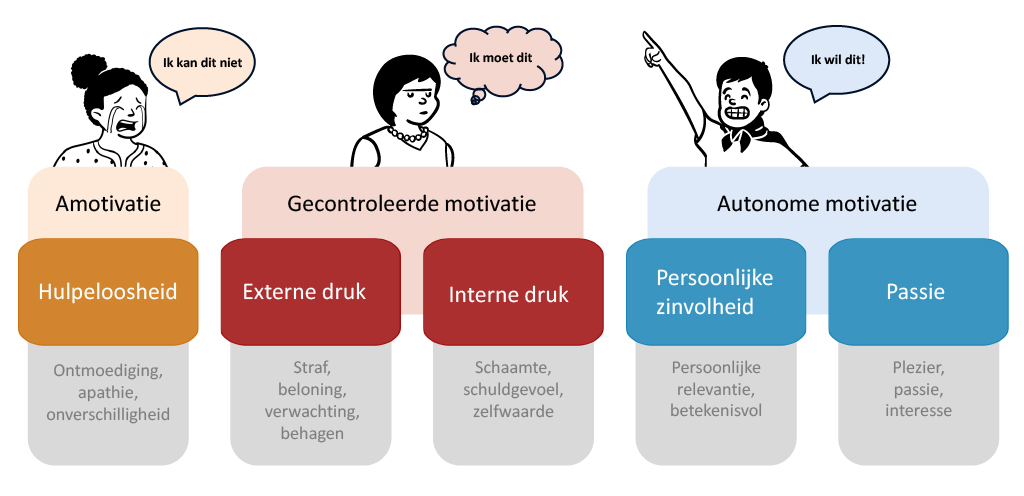
Amotivatie
Aan de minst gunstige kant van het continuüm staat demotivatie, ook wel amotivatie genoemd. Leerlingen zien dan geen nut in een taak of verwachten niet dat hun inzet iets oplevert. Ze nemen geen initiatief, stellen taken uit of haken af. Amotivatie gaat vaak samen met passiviteit, weinig inzet of oppervlakkig leren en een verminderd gevoel van grip op het eigen leerproces.
Gecontroleerde motivatie
Bij gecontroleerde motivatie zet een leerling zich in omdat hij druk of verplichting ervaart. Die druk kan van buitenaf komen maar ook van binnenuit. Ryan en Deci
Ryan, R. M., & Deci, E. L. (2000). Self-determination theory: The facilitation of intrinsic motivation, social development, and well-being. American Psychologist, 55(1), 68–78. https://doi.org/10.1037/0003-066X.55.1.68
onderscheiden twee vormen van gecontroleerde motivatie.
- Externe verplichting of externe druk
Een leerling voert een taak uit vanwege een externe eis of om een gewenste uitkomst te verkrijgen of een ongewenste consequentie te vermijden. Bijvoorbeeld: ‘Ik maak deze opdracht omdat de docent het van mij verwacht.’ - Interne verplichting of interne druk
De druk komt hier meer van binnenuit. Een leerling zet zich bijvoorbeeld in om schuld- of schaamtegevoelens te vermijden of om zichzelf te bewijzen. Bijvoorbeeld: ‘Ik moet hier een goed cijfer voor halen, anders ben ik teleurgesteld in mezelf.’
Autonome motivatie
Bij autonome motivatie ervaren leerlingen dat hun gedrag voortkomt uit eigen interesses en overtuigingen, in plaats van uit druk of verplichting
Ryan, R. M., & Deci, E. L. (2000). Self-determination theory: The facilitation of intrinsic motivation, social development, and well-being. American Psychologist, 55(1), 68–78. https://doi.org/10.1037/0003-066X.55.1.68
Ryan, R. M., & Deci, E. L. (2017). Self-determination theory: Basic psychological needs in motivation, development, and wellness. Guilford Press. https://doi.org/10.1521/978.14625/28806
We onderscheiden twee typen autonome motivatie
Ryan, R. M., & Deci, E. L. (2000). Self-determination theory: The facilitation of intrinsic motivation, social development, and well-being. American Psychologist, 55(1), 68–78. https://doi.org/10.1037/0003-066X.55.1.68
- Persoonlijke zinvolheid
Een leerling ziet de activiteit als persoonlijk waardevol of relevant. De activiteit zelf hoeft niet interessant te zijn, maar de leerling staat achter de reden om haar uit te voeren. Bijvoorbeeld: ‘Ik wil verpleegkundige worden. Daarom vind ik het belangrijk om te begrijpen hoe het menselijk lichaam werkt.’ - Intrinsieke motivatie of passie
Bij intrinsieke motivatie voert een leerling een activiteit uit vanwege de interesse of voldoening die de activiteit zelf oproept. De leerling is bijvoorbeeld geboeid door een onderwerp of vindt het uitdagend om een probleem op te lossen Ryan, R. M., & Deci, E. L. (2000). Self-determination theory: The facilitation of intrinsic motivation, social development, and well-being. American Psychologist, 55(1), 68–78. https://doi.org/10.1037/0003-066X.55.1.68
Ryan, R. M., & Deci, E. L. (2020). Intrinsic and extrinsic motivation from a self-determination theory perspective: Definitions, theory, practices, and future directions. Contemporary Educational Psychology, 61, Article 101860. https://doi.org/10.1016/j.cedpsych.2020.101860
De kwaliteit van motivatie neemt toe naarmate leerlingen meer achter de redenen voor hun gedrag staan. Er zijn sterke aanwijzingen dat autonome vormen van motivatie meer samenhangen met betere leeruitkomsten dan gecontroleerde motivatie en amotivatie
Howard, J. L., Bureau, J. S., Guay, F., Chong, J. X. Y., & Ryan, R. M. (2021). Student motivation and associated outcomes: A meta-analysis from self-determination theory. Perspectives on Psychological Science, 16(6), 1300–1323. https://doi.org/10.1177/1745691620966789
Ryan, R. M., Duineveld, J. J., Di Domenico, S. I., Ryan, W. S., Steward, B. A., & Bradshaw, E. L. (2022). We know this much is (meta-analytically) true: A meta-review of meta-analytic findings evaluating self-determination theory. Psychological Bulletin, 148(11–12), 813–842. https://doi.org/10.1037/bul0000385
Hoe meer naar rechts op het continuüm, hoe beter de kwaliteit van de motivatie en hoe sterker de samenhang met goede leeruitkomsten.
Vanuit welke motivatie zetten leerlingen zich in?
Leerlingen zijn niet altijd op dezelfde manier gemotiveerd. De redenen waarom een leerling zich inzet (de bovenbeschreven typen motivatie), kunnen verschillen tussen vakken, taken en momenten en kunnen gedurende het leerproces en in de tijd veranderen. Een leerling hoeft een schooltaak niet meteen intrinsiek interessant te vinden om er toch gemotiveerd mee aan de slag te gaan. Het is van belang om te weten vanuit welk type motivatie leerlingen zich inzetten, omdat de verschillende vormen van motivatie verschillend samenhangen met prestaties en welbevinden. Als je als docent meer zicht hebt op de redenen waarom leerlingen zich wel of niet inzetten, kun je daar in je begeleiding rekening mee houden
Howard, J. L., Bureau, J. S., Guay, F., Chong, J. X. Y., & Ryan, R. M. (2021). Student motivation and associated outcomes: A meta-analysis from self-determination theory. Perspectives on Psychological Science, 16(6), 1300–1323. https://doi.org/10.1177/1745691620966789
Ryan, R. M., Duineveld, J. J., Di Domenico, S. I., Ryan, W. S., Steward, B. A., & Bradshaw, E. L. (2022). We know this much is (meta-analytically) true: A meta-review of meta-analytic findings evaluating self-determination theory. Psychological Bulletin, 148(11–12), 813–842. https://doi.org/10.1037/bul0000385
Vasconcellos, D., Parker, P. D., Hilland, T., Cinelli, R., Owen, K. B., Kapsal, N., ... & Lonsdale, C. (2020). Self-determination theory applied to physical education: A systematic review and meta-analysis. Journal of educational psychology, 112(7), 1444. https://doi.org/10.1037/edu0000420
Wijsman, L. A., Saab, N., Warrens, M. J., van Driel, J. H., & Westenberg, P. M. (2018). Relations of autonomous and controlled motivation with performance in secondary school students’ favoured and disfavoured subjects. Educational Research and Evaluation, 24(1–2), 51–67. https://doi.org/10.1080/13803611.2018.1512872
Autonome motivatie hangt samen met diepgaander leren, meer betrokkenheid, meer volharding, betere prestaties en meer welbevinden
Howard, J. L., Bureau, J. S., Guay, F., Chong, J. X. Y., & Ryan, R. M. (2021). Student motivation and associated outcomes: A meta-analysis from self-determination theory. Perspectives on Psychological Science, 16(6), 1300–1323. https://doi.org/10.1177/1745691620966789
Vasconcellos, D., Parker, P. D., Hilland, T., Cinelli, R., Owen, K. B., Kapsal, N., ... & Lonsdale, C. (2020). Self-determination theory applied to physical education: A systematic review and meta-analysis. Journal of educational psychology, 112(7), 1444. https://doi.org/10.1037/edu0000420
Wijsman, L. A., Saab, N., Warrens, M. J., van Driel, J. H., & Westenberg, P. M. (2018). Relations of autonomous and controlled motivation with performance in secondary school students’ favoured and disfavoured subjects. Educational Research and Evaluation, 24(1–2), 51–67. https://doi.org/10.1080/13803611.2018.1512872
Bij diepgaand leren probeert een leerling de betekenis van de leerstof te begrijpen en verbanden te leggen met bestaande kennis, in plaats van informatie vooral te onthouden om deze later te kunnen reproduceren (Dolmans et al., 2016). Intrinsieke motivatie hangt daarnaast samen met betere prestaties bij complexe leertaken omdat deze motivatievorm diepere betrokkenheid en probleemoplossend denken ondersteunt
Ryan, R. M., Duineveld, J. J., Di Domenico, S. I., Ryan, W. S., Steward, B. A., & Bradshaw, E. L. (2022). We know this much is (meta-analytically) true: A meta-review of meta-analytic findings evaluating self-determination theory. Psychological Bulletin, 148(11–12), 813–842. https://doi.org/10.1037/bul0000385
Gecontroleerde vormen van motivatie, zoals het ervaren van externe of interne druk, kunnen op korte termijn een kickstart zijn voor het leerproces. Ze gaan echter vaker gepaard met stress, oppervlakkiger leren en een grotere kans op afhaken zodra de druk wegvalt
Ryan, R. M., & Deci, E. L. (2000). Self-determination theory: The facilitation of intrinsic motivation, social development, and well-being. American Psychologist, 55(1), 68–78. https://doi.org/10.1037/0003-066X.55.1.68
Ryan, R. M., & Deci, E. L. (2017). Self-determination theory: Basic psychological needs in motivation, development, and wellness. Guilford Press. https://doi.org/10.1521/978.14625/28806
Demotivatie hangt doorgaans samen met de minst gunstige leeruitkomsten
Howard, J. L., Bureau, J. S., Guay, F., Chong, J. X. Y., & Ryan, R. M. (2021). Student motivation and associated outcomes: A meta-analysis from self-determination theory. Perspectives on Psychological Science, 16(6), 1300–1323. https://doi.org/10.1177/1745691620966789
Het is van belang om rekening te houden met de onderliggende motivatie die leerlingen laten zien en daar jouw handelen op af te stemmen. Een voorbeeld: Twee leerlingen werken beide hard. De ene omdat hij bang is voor een onvoldoende, de andere omdat hij inziet dat de opdracht belangrijk is voor zijn toekomstige beroep. Het is voor een docent niet eenvoudig om op basis van gedrag vast te stellen vanuit welk type motivatie de leerlingen handelen. Wel kun je als docent leerlingen regelmatig uitnodigen om na te denken en te praten over hun redenen om zich in te zetten. Als je weet vanuit welke motivatie leerlingen gemotiveerd zijn, kun je daar als docent op inspelen en er rekening mee houden. Je kunt bijvoorbeeld het belang van de taak duidelijk maken zodat leerlingen meer inzicht krijgen in waarom het uitvoeren ervan noodzakelijk is. Bij een leerling die is afgehaakt, is het belangrijk eerst te onderzoeken waarom de leerling geen reden meer ziet om zich in te zetten. Ziet de leerling het belang van de taak niet, voelt de taak onhaalbaar of ervaart de leerling weinig verbinding met de docent of klas? Dat maakt uit voor wat nodig is. Een docent kan vervolgens bijvoorbeeld de persoonlijke relevantie van de taak helpen verduidelijken, passende ondersteuning bieden en haalbare succeservaringen mogelijk maken.
Je kunt de autonome motivatie van leerlingen versterken door een leeromgeving te creëren die voldoet aan drie psychologische basisbehoeften en autonome motivatie versterkt
Vansteenkiste, M., & Soenens, B. (2015). Vitamines voor groei: Ontwikkeling voeden vanuit de zelfdeterminatietheorie. Acco.
Vansteenkiste, M., & Soenens, B. (2025). Het ABC van motivatie in onderwijs: Een psychologische basis voor elke leerling en leraar. Lannoo Meulenhoff-Belgium.
Vansteenkiste, M., Ryan, R. M., & Soenens, B. (2020). Basic psychological need theory: Advancements, critical themes, and future directions. Motivation and Emotion, 44(1), 1–31. https://doi.org/10.1007/s11031-019-09818-1
Drie psychologische basisbehoeften
De zelfdeterminatietheorie gaat ervan uit dat mensen van nature willen groeien, leren en zich ontwikkelen, mits de omgeving dat ondersteunt
Ryan, R. M., & Deci, E. L. (2017). Self-determination theory: Basic psychological needs in motivation, development, and wellness. Guilford Press. https://doi.org/10.1521/978.14625/28806
Vansteenkiste, M., & Soenens, B. (2015). Vitamines voor groei: Ontwikkeling voeden vanuit de zelfdeterminatietheorie. Acco.
Vansteenkiste, M., & Soenens, B. (2025). Het ABC van motivatie in onderwijs: Een psychologische basis voor elke leerling en leraar. Lannoo Meulenhoff-Belgium.
Vansteenkiste, M., Ryan, R. M., & Soenens, B. (2020). Basic psychological need theory: Advancements, critical themes, and future directions. Motivation and Emotion, 44(1), 1–31. https://doi.org/10.1007/s11031-019-09818-1
Leerlingen brengen hun eigen interesses, ervaringen en voorkeuren mee. Tegelijk heeft de manier waarop docenten lesgeven veel invloed. Denk aan hoe zij uitleg geven, feedback geven, structuur bieden en omgaan met leerlingen. Deze keuzes bepalen mede welk type motivatie bij de leerlingen wordt aangesproken.
Volgens de zelfdeterminatietheorie hangt de kwaliteit van motivatie, en daarmee de positieve aspecten, samen met de ondersteuning van drie psychologische basisbehoeften: autonomie, competentie en verbondenheid
Ryan, R. M., & Deci, E. L. (2000). Self-determination theory: The facilitation of intrinsic motivation, social development, and well-being. American Psychologist, 55(1), 68–78. https://doi.org/10.1037/0003-066X.55.1.68
Vansteenkiste, M., Ryan, R. M., & Soenens, B. (2020). Basic psychological need theory: Advancements, critical themes, and future directions. Motivation and Emotion, 44(1), 1–31. https://doi.org/10.1007/s11031-019-09818-1
Door deze drie basisbehoeften te ondersteunen, kunnen docenten bijdragen aan de ontwikkeling van autonome motivatie. Als deze behoeften onder druk staan, verschuift motivatie eerder naar gecontroleerde motivatie of zelfs demotivatie
Ryan, R. M., Duineveld, J. J., Di Domenico, S. I., Ryan, W. S., Steward, B. A., & Bradshaw, E. L. (2022). We know this much is (meta-analytically) true: A meta-review of meta-analytic findings evaluating self-determination theory. Psychological Bulletin, 148(11–12), 813–842. https://doi.org/10.1037/bul0000385
Er bestaat geen aanpak die altijd en voor iedereen werkt. Dit betekent dat motivatie geen trucje is en ook geen knop die je eenvoudig aan of uit zet. Wel is er een duidelijke richting: als je als docent deze drie basisbehoeften ondersteunt, vergroot je de kans dat leerlingen meer autonoom gemotiveerd raken
Vansteenkiste, M., & Soenens, B. (2015). Vitamines voor groei: Ontwikkeling voeden vanuit de zelfdeterminatietheorie. Acco.
Vansteenkiste, M., & Soenens, B. (2025). Het ABC van motivatie in onderwijs: Een psychologische basis voor elke leerling en leraar. Lannoo Meulenhoff-Belgium.
Vansteenkiste, M., Ryan, R. M., & Soenens, B. (2020). Basic psychological need theory: Advancements, critical themes, and future directions. Motivation and Emotion, 44(1), 1–31. https://doi.org/10.1007/s11031-019-09818-1
In de praktijk leeft bijvoorbeeld soms de misvatting dat alleen het bieden van keuzes genoeg is om autonome motivatie te bevorderen
Reeve, J. (2009). Why teachers adopt a controlling motivating style toward students and how they can become more autonomy supportive. Educational Psychologist, 44(3), 159–175. https://doi.org/10.1080/00461520903028990
Dat is niet zo, het gaat om het ondersteunen van alle drie basisbehoeften.
Hieronder lichten we deze drie psychologische basisbehoeften eerst apart verder toe en geven er concrete voorbeelden van wat je kunt doen. Op basis van
Ahmadi, A., Noetel, M., Parker, P., Ryan, R. M., Ntoumanis, N., Reeve, J., Beauchamp, M., Dicke, T., Yeung, A., Ahmadi, M., Bartholomew, K., Chiu, T. K. F., Curran, T., Erturan, G., Flunger, B., Frederick, C., Froiland, J. M., González-Cutre, D., Haerens, L., . . . Lonsdale, C. (2023). A classification system for teachers’ motivational behaviors recommended in self-determination theory interventions. Journal of Educational Psychology, 115(8), 1158–1176. https://doi.org/10.1037/edu0000783
is een tool ontwikkeld waarin meer concretere voorbeelden staan voor hoe je in de les de behoefte aan autonomie, competentie en verbondenheid kunt bevorderen.
Lees ook
Handvat met voorbeelden van motivatiebevorderend gedrag
Hoe ondersteun je de behoefte aan autonomie?
Autonomie gaat over de ervaring dat je vrijwillig achter je eigen handelen staat. Je ervaart dat wat je doet past bij je eigen interesses, waarden of doelen, ook wanneer een ander, bijvoorbeeld een docent, de taak of kaders bepaalt
Ryan, R. M., & Deci, E. L. (2017). Self-determination theory: Basic psychological needs in motivation, development, and wellness. Guilford Press. https://doi.org/10.1521/978.14625/28806
Bij autonomieondersteuning ervaren leerlingen keuzevrijheid in denken, voelen en handelen, en hebben het idee dat hun mening en voorkeuren ertoe doen
deCharms, R. (1968). Personal causation: The internal affective determinants of behavior. Academic Press.
Deci, E. L., & Ryan, R. M. (1985). Intrinsic motivation and self-determination in human behavior. Plenum.
Ryan, R. M., & Deci, E. L. (2017). Self-determination theory: Basic psychological needs in motivation, development, and wellness. Guilford Press. https://doi.org/10.1521/978.14625/28806
In het onderwijs betekent dit dat leerlingen zich in zekere mate eigenaar voelen van hun leerproces
Deci, E. L., & Ryan, R. M. (2000). The “what” and “why” of goal pursuits: Human needs and the self-determination of behavior. Psychological Inquiry, 11(4), 227–268. https://doi.org/10.1207/S15327965PLI1104_01
Ryan, R. M., & Deci, E. L. (2017). Self-determination theory: Basic psychological needs in motivation, development, and wellness. Guilford Press. https://doi.org/10.1521/978.14625/28806
Autonomieondersteuning verwijst naar de manier waarop docenten dit gevoel van eigenaarschap actief versterken
Reeve, J. (2009). Why teachers adopt a controlling motivating style toward students and how they can become more autonomy supportive. Educational Psychologist, 44(3), 159–175. https://doi.org/10.1080/00461520903028990
Jang, H., Reeve, J., & Deci, E. L. (2010). Engaging students in learning activities: It is not autonomy support or structure but autonomy support and structure. Journal of Educational Psychology, 102(3), 588–600. https://doi.org/10.1037/a0019682
Reeve, J., & Cheon, S. H. (2021). Autonomy-supportive teaching: Its malleability, benefits, and potential to improve educational practice. Educational Psychologist, 56(1), 54–77. https://doi.org/10.1080/00461520.2020.1862657
Een groot aantal onderzoeken laat zien dat autonomieondersteuning van leraren samenhangt met meer motivatie, betrokkenheid en betere prestaties
Howard, J. L., Slemp, G. R., & Wang, X. (2025). Need support and need thwarting: A meta-analysis of autonomy, competence, and relatedness supportive and thwarting behaviors in student populations. Personality and Social Psychology Bulletin, 51(9), 1552–1573. https://doi.org/10.1177/01461672231225364
Mammadov, S., & Schroeder, K. (2023). A meta-analytic review of the relationships between autonomy support and positive learning outcomes. Contemporary Educational Psychology, 75. https://doi.org/10.1016/j.cedpsych.2023.102235
Patzak, A., & Zhang, X. (2025). Blending teacher autonomy support and provision of structure in the classroom for optimal motivation: A systematic review and meta-analysis. Educational Psychology Review, 37, Article 17. https://doi.org/10.1007/s10648-025-09994-2
Wang, Y., Wang, H., Wang, S., Wind, S. A., & Gill, C. (2024). A systematic review and meta-analysis of self-determination-theory-based interventions in the education context. Learning and Motivation, 87, 102015. https://doi.org/10.1016/j.lmot.2024.102015
Autonomieondersteuning hangt samen met zelfregulerend leren, waarbij leerlingen hun eigen leerproces sturen
Jossberger, H., Brand‐Gruwel, S., Boshuizen, H., & Van de Wiel, M. (2010). The challenge of self‐directed and self‐regulated learning in vocational education: A theoretical analysis and synthesis of requirements. Journal of Vocational Education and Training, 62(4), 415-440. https://doi.org/10.1080/13636820.2010.523479
Zheng, J., Jiang, N., & Dou, J. (2020). Autonomy support and academic stress: a relationship mediated by self-regulated learning and mastery goal orientation. New Waves-Educational Research and Development Journal,23, 43-63.
Het is belangrijk dat leerlingen zelfregulatievaardigheden leren, omdat ze die bijvoorbeeld nodig hebben om in hun beroep nieuwe vaardigheden te leren. Het ontwikkelen van deze vaardigheden, zoals leerdoelen stellen, plannen van leeractiviteiten en het controleren van het eigen werk, vraagt begeleiding van docenten
Zimmerman, B. J. (2008). Investigating self-regulation and motivation: Historical background, methodological developments, and future prospects. American Educational Research Journal, 45(1), 166–183. https://doi.org/10.3102/0002831207312909
Lees ook
Themapagina over zelfregulerend leren
Wat je als docent kunt doen
- Geef betekenisvolle keuzes
Keuzevrijheid kan de autonome motivatie ondersteunen wanneer leerlingen ervaren dat er daadwerkelijk iets te kiezen valt en de opties voor hen betekenisvol zijn. Meer keuze is daarbij niet automatisch beter; te veel of weinig relevante opties kunnen de waarde van keuze verminderen Patall, E. A., Cooper, H., & Robinson, J. C. (2008). The effects of choice on intrinsic motivation and related outcomes: A meta-analysis of research findings. Psychological Bulletin, 134(2), 270–300. https://doi.org/10.1037/0033-2909.134.2.270
Je kunt leerlingen bijvoorbeeld laten kiezen uit enkele onderwerpen of casussen, verschillende manieren om een opdracht aan te pakken of verschillende vormen waarin zij hun leren zichtbaar maken, zoals een verslag, presentatie, video of ander passend product. Zorg daarbij dat iedere optie dezelfde leerdoelen dient en voor leerlingen haalbaar is. - Luister actief naar leerlingen en neem weerstand serieus
Autonomieondersteuning begint met serieus luisteren naar leerlingen. Door hun ideeën, vragen en zorgen te erkennen, ervaren leerlingen dat hun stem ertoe doet. Dit vergroot hun gevoel van eigenaarschap en betrokkenheid Ahmadi, A., Noetel, M., Parker, P., Ryan, R. M., Ntoumanis, N., Reeve, J., Beauchamp, M., Dicke, T., Yeung, A., Ahmadi, M., Bartholomew, K., Chiu, T. K. F., Curran, T., Erturan, G., Flunger, B., Frederick, C., Froiland, J. M., González-Cutre, D., Haerens, L., . . . Lonsdale, C. (2023). A classification system for teachers’ motivational behaviors recommended in self-determination theory interventions. Journal of Educational Psychology, 115(8), 1158–1176. https://doi.org/10.1037/edu0000783
Als docenten eerst luisteren naar weerstand of frustratie, voelen leerlingen zich gezien Aelterman, N., Vansteenkiste, M., Haerens, L., Soenens, B., Fontaine, J. R. J., & Reeve, J. (2019). Toward an integrative and fine-grained insight in motivating and demotivating teaching styles: The merits of a circumplex approach. Journal of Educational Psychology, 111(3), 497–521. https://doi.org/10.1037/edu0000293
Cohen, R., Katz, I., & Dotan, N. (2019). Teachers’ sense of meaning in teaching and autonomy-supportive style. Teaching and Teacher Education, 84, 1–10.
Reeve, J., Cheon, S. H., & Jang, H. (2020). How and why students make academic progress: Reconceptualizing the student–teacher transaction. Educational Psychologist, 55(2), 1–17. https://doi.org/10.1016/j.cedpsych.2020.101899
Reeve, J., & Cheon, S. H. (2021). Autonomy-supportive teaching: Its malleability, benefits, and potential to improve educational practice. Educational Psychologist, 56(1), 54–77. https://doi.org/10.1080/00461520.2020.1862657
Dat betekent niet dat leerlingen altijd hun zin krijgen of zelf mogen weten wat ze doen, maar wel dat ze merken dat hun mening ertoe doet Ahmadi, A., Noetel, M., Parker, P., Ryan, R. M., Ntoumanis, N., Reeve, J., Beauchamp, M., Dicke, T., Yeung, A., Ahmadi, M., Bartholomew, K., Chiu, T. K. F., Curran, T., Erturan, G., Flunger, B., Frederick, C., Froiland, J. M., González-Cutre, D., Haerens, L., . . . Lonsdale, C. (2023). A classification system for teachers’ motivational behaviors recommended in self-determination theory interventions. Journal of Educational Psychology, 115(8), 1158–1176. https://doi.org/10.1037/edu0000783
- Leg uit waarom een taak belangrijk is
Vooral wanneer taken niet vanzelf interessant zijn, helpt een goede uitleg van het belang ervan. Leerlingen zetten zich eerder in wanneer zij begrijpen waarom een taak waardevol is Jang, H. (2008). Supporting students’ motivation, engagement, and learning during an uninteresting activity. Journal of Educational Psychology, 100(4), 798–811. https://doi.org/10.1037/a0012841
Vansteenkiste, M., & Soenens, B. (2025). Het ABC van motivatie in onderwijs: Een psychologische basis voor elke leerling en leraar. Lannoo Meulenhoff-Belgium.
In het (v)mbo ligt die waarde vaak in het beter kunnen uitoefenen van het beroep waarvoor wordt opgeleid. Bij algemeen vormende vakken kan het gaan om aansluiting op actualiteit, de eigen belevingswereld van leerlingen, vervolgstudie of persoonlijke ontwikkeling.
Hoe ondersteun je de behoefte aan competentie?
Competentie gaat over het gevoel dat je iets aankunt, al dan niet met behulp van een ander, en vooruitgang boekt
White, R. W. (1959). Motivation reconsidered: The concept of competence. Psychological Review, 66(5), 297–333. https://doi.org/10.1037/h0040934
Deci, E. L., & Ryan, R. M. (2000). The “what” and “why” of goal pursuits: Human needs and the self-determination of behavior. Psychological Inquiry, 11(4), 227–268. https://doi.org/10.1207/S15327965PLI1104_01
Het gaat daarbij niet alleen om wat een leerling daadwerkelijk kan, maar ook om de mate waarin een leerling zich bekwaam voelt. Een leerling kan een taak bijvoorbeeld goed uitvoeren en zich daar toch onzeker over voelen. Leerlingen ervaren competentie wanneer zij merken dat zij taken kunnen uitvoeren en zich ontwikkelen. Dat gevoel ontstaat niet vanzelf. Leerlingen hebben daarvoor duidelijkheid, houvast en gerichte ondersteuning nodig. Binnen de zelfdeterminatietheorie wordt deze ondersteuning vaak beschreven als structuur. Structuurondersteuning betekent dat een leraar een leeromgeving creëert die overzichtelijk, voorspelbaar en doelgericht is, en waarin leerlingen stap voor stap begeleid worden in hun leerproces
Aelterman, N., Vansteenkiste, M., Haerens, L., Soenens, B., Fontaine, J. R. J., & Reeve, J. (2019). Toward an integrative and fine-grained insight in motivating and demotivating teaching styles: The merits of a circumplex approach. Journal of Educational Psychology, 111(3), 497–521. https://doi.org/10.1037/edu0000293
Reeve, J., & Cheon, S. H. (2021). Autonomy-supportive teaching: Its malleability, benefits, and potential to improve educational practice. Educational Psychologist, 56(1), 54–77. https://doi.org/10.1080/00461520.2020.1862657
Het gaat daarbij om structuur in je gedrag als docent: heldere verwachtingen, passende instructie, gerichte hulp en informatieve feedback
Ahmadi, A., Noetel, M., Parker, P., Ryan, R. M., Ntoumanis, N., Reeve, J., Beauchamp, M., Dicke, T., Yeung, A., Ahmadi, M., Bartholomew, K., Chiu, T. K. F., Curran, T., Erturan, G., Flunger, B., Frederick, C., Froiland, J. M., González-Cutre, D., Haerens, L., . . . Lonsdale, C. (2023). A classification system for teachers’ motivational behaviors recommended in self-determination theory interventions. Journal of Educational Psychology, 115(8), 1158–1176. https://doi.org/10.1037/edu0000783
Structuur hangt samen met meer autonome motivatie
Aelterman, N., Vansteenkiste, M., Haerens, L., Soenens, B., Fontaine, J. R. J., & Reeve, J. (2019). Toward an integrative and fine-grained insight in motivating and demotivating teaching styles: The merits of a circumplex approach. Journal of Educational Psychology, 111(3), 497–521. https://doi.org/10.1037/edu0000293
Mammadov, S., & Schroeder, K. (2023). A meta-analytic review of the relationships between autonomy support and positive learning outcomes. Contemporary Educational Psychology, 75. https://doi.org/10.1016/j.cedpsych.2023.102235
Wat je als docent kunt doen
- Maak doelen en verwachtingen helder
Leerlingen leren beter wanneer zij weten wat er van hen verwacht wordt. Duidelijkheid over doelen, opdrachten en toetsing helpt hen om hun inspanningen te richten Aelterman, N., Vansteenkiste, M., Haerens, L., Soenens, B., Fontaine, J. R. J., & Reeve, J. (2019). Toward an integrative and fine-grained insight in motivating and demotivating teaching styles: The merits of a circumplex approach. Journal of Educational Psychology, 111(3), 497–521. https://doi.org/10.1037/edu0000293
In het vo kan dat gaan om duidelijke toetsstof of helderheid in wat leerlingen moeten leren. In het mbo bijvoorbeeld om expliciete beoordelingscriteria die vooraf worden gedeeld, zodat de student duidelijk weet waar de student aan kan werken. - Geef procesgerichte feedback
Feedback werkt het best wanneer die laat zien wat al goed gaat, welke aanpak werkt en wat een logische volgende stap is Boud, D., & Molloy, E. (2013). Rethinking models of feedback for learning: the challenge of design. Assessment & Evaluation in Higher Education, 38(6), 698-712. https://doi.org/10.1080/02602938.2012.691462
Algemene opmerkingen als ‘Doe beter je best’ helpen vaak weinig, omdat ze geen richting geven. Geef feedback die leerlingen informatie geeft over waar zij staan, wat in hun aanpak werkt en wat een passende volgende stap is. - Bied passende hulp
Tijdens het oefenen en toepassen hebben leerlingen ondersteuning nodig. Dat kan variëren van extra uitleg tot gerichte hints of het voordoen van een strategie. Belangrijk is dat deze hulp aansluit bij het niveau van de leerling. Te weinig hulp leidt tot frustratie, terwijl te veel hulp het gevoel van autonomie kan verminderen Reeve, J., Deci, E.L. & Ryan, R.M. (2004). Self-determination theory: A dialectical framework for understanding socio-cultural influences on student motivation. In D.M. McInerney & S. van Etten (Eds.), Big Theories revisited, 31-60. Greenwich, CT: Information Age Publishing.
Hoe ondersteun je de behoefte aan verbondenheid?
Verbondenheid verwijst naar de ervaring dat je erbij hoort, gewaardeerd wordt en kunt rekenen op anderen
Baumeister, R. F., & Leary, M. R. (1995). The need to belong: Desire for interpersonal attachments as a fundamental human motivation. Psychological Bulletin, 117(3), 497–529. https://doi.org/10.1037/0033-2909.117.3.497
Deci, E. L., & Ryan, R. M. (2000). The “what” and “why” of goal pursuits: Human needs and the self-determination of behavior. Psychological Inquiry, 11(4), 227–268. https://doi.org/10.1207/S15327965PLI1104_01
Ryan, R. M., & Deci, E. L. (2017). Self-determination theory: Basic psychological needs in motivation, development, and wellness. Guilford Press. https://doi.org/10.1521/978.14625/28806
Verbondenheid kan zowel ontstaan in de individuele relatie tussen leraar en leerling als in de relaties tussen leerlingen onderling en het gevoel deel uit te maken van de groep
Korpershoek, H., Canrinus, E. T., Fokkens-Bruinsma, M., & de Boer, H. (2020). The relationships between school belonging and students’ motivational, social-emotional, behavioural, and academic outcomes in secondary education: a meta-analytic review. Research Papers in Education, 35(6), 641–680. https://doi.org/10.1080/02671522.2019.1615116
Onderzoek laat zien dat de affectieve relatie tussen leraar en leerling samenhangt met betrokkenheid en schoolprestaties van leerlingen
Emslander, V. , Holzberger, D. , Ofstad, S. B. , Fischbach, A. & Scherer, R. (2025). Teacher–student relationships and student outcomes: A systematic second-order meta-analytic review. Psychological Bulletin, 151(3), 365-397. https://doi.org/10.1037/bul0000461
Roorda, D. L., Koomen, H. M. Y., Spilt, J. L., & Oort, F. J. (2011). The influence of affective teacher-student relationships on students’ school engagement and achievement: A meta-analytic approach. Review of Educational Research, 81(4), 493–529. https://doi.org/10.3102/0034654311421793
Roorda, D. L., Jak, S., Zee, M., Oort, F. J., & Koomen, H. M. Y. (2017). Affective teacher-student relationships and students’ engagement and achievement: A meta-analytic update and test of the mediating role of engagement. School Psychology Review, 46(3), 239–261. https://doi.org/10.17105/SPR-2017-0035.V46-3
Leerlingen raken vaker gemotiveerd wanneer zij hun leraar ervaren als benaderbaar, zorgzaam en oprecht geïnteresseerd
Ahmadi, A., Noetel, M., Parker, P., Ryan, R. M., Ntoumanis, N., Reeve, J., Beauchamp, M., Dicke, T., Yeung, A., Ahmadi, M., Bartholomew, K., Chiu, T. K. F., Curran, T., Erturan, G., Flunger, B., Frederick, C., Froiland, J. M., González-Cutre, D., Haerens, L., . . . Lonsdale, C. (2023). A classification system for teachers’ motivational behaviors recommended in self-determination theory interventions. Journal of Educational Psychology, 115(8), 1158–1176. https://doi.org/10.1037/edu0000783
Verbondenheid vormt een belangrijke basis voor leren. Leerlingen die zich gezien en gesteund voelen, durven meer, stellen eerder vragen en zetten zich vaker in. Ook in vo en mbo, waar de nadruk vaak ligt op prestaties en zelfstandigheid, blijft een goede relatie tussen leraar en leerling belangrijk
Emslander, V. , Holzberger, D. , Ofstad, S. B. , Fischbach, A. & Scherer, R. (2025). Teacher–student relationships and student outcomes: A systematic second-order meta-analytic review. Psychological Bulletin, 151(3), 365-397. https://doi.org/10.1037/bul0000461
Zonder gevoel van verbondenheid komt motivatie moeilijk tot stand. Met een sterke relatie en een positief klimaat krijgen leerlingen juist de ruimte om te leren en zich te ontwikkelen
Ahmadi, A., Noetel, M., Parker, P., Ryan, R. M., Ntoumanis, N., Reeve, J., Beauchamp, M., Dicke, T., Yeung, A., Ahmadi, M., Bartholomew, K., Chiu, T. K. F., Curran, T., Erturan, G., Flunger, B., Frederick, C., Froiland, J. M., González-Cutre, D., Haerens, L., . . . Lonsdale, C. (2023). A classification system for teachers’ motivational behaviors recommended in self-determination theory interventions. Journal of Educational Psychology, 115(8), 1158–1176. https://doi.org/10.1037/edu0000783
Wat je als docent kunt doen
- Laat zien dat je leerlingen ziet
Verbondenheid ontstaat vaak in kleine momenten. Wanneer een docent bijvoorbeeld opmerkt dat een leerling stiller is dan anders, kan hij de leerling vragen hoe het gaat, naar zijn mening vragen en ook in een drukke periode even tijd maken na de les Ahmadi, A., Noetel, M., Parker, P., Ryan, R. M., Ntoumanis, N., Reeve, J., Beauchamp, M., Dicke, T., Yeung, A., Ahmadi, M., Bartholomew, K., Chiu, T. K. F., Curran, T., Erturan, G., Flunger, B., Frederick, C., Froiland, J. M., González-Cutre, D., Haerens, L., . . . Lonsdale, C. (2023). A classification system for teachers’ motivational behaviors recommended in self-determination theory interventions. Journal of Educational Psychology, 115(8), 1158–1176. https://doi.org/10.1037/edu0000783
Laat zien dat je leerlingen ziet. Maak bijvoorbeeld persoonlijk contact bij binnenkomst in de klas of vraag als begeleider bij een werkplekbezoek hoe het écht gaat. - Bouw aan een veilige relatie
Leerlingen voelen zich meer betrokken wanneer zij zich veilig en geaccepteerd voelen. Laat leerlingen ervaren dat zij bij je terechtkunnen wanneer dat nodig is. Reageer voorspelbaar en respectvol, kom afspraken na en blijf ook bij fouten of moeilijk gedrag gericht op het behouden van de relatie. - Werk aan een positief groepsklimaat
Verbondenheid speelt niet alleen tussen leraar en leerling, maar ook tussen leerlingen onderling. Een gevoel van erbij horen hangt samen met meer betrokkenheid en betere leeruitkomsten Korpershoek, H., Canrinus, E. T., Fokkens-Bruinsma, M., & de Boer, H. (2020). The relationships between school belonging and students’ motivational, social-emotional, behavioural, and academic outcomes in secondary education: a meta-analytic review. Research Papers in Education, 35(6), 641–680. https://doi.org/10.1080/02671522.2019.1615116
Wanneer leerlingen zich buitengesloten of onzichtbaar voelen, neemt motivatie juist af Korpershoek, H., Canrinus, E. T., Fokkens-Bruinsma, M., & de Boer, H. (2020). The relationships between school belonging and students’ motivational, social-emotional, behavioural, and academic outcomes in secondary education: a meta-analytic review. Research Papers in Education, 35(6), 641–680. https://doi.org/10.1080/02671522.2019.1615116
Stimuleer dat leerlingen elkaar leren kennen en samenwerken, besteed expliciet aandacht aan respectvolle omgang en grijp in bij buitensluiting. Organiseer regelmatig werkvormen waarin leerlingen met verschillende klasgenoten samenwerken en zorg ervoor dat iedere leerling een betekenisvolle plek in de groep kan innemen.
Lees ook
Leidraad over leraar-leerlingrelaties in het voortgezet onderwijs
De kracht zit in de combinatie
Autonomie, competentie en verbondenheid zijn drie onderscheiden psychologische basisbehoeften die in de onderwijspraktijk nauw met elkaar samenhangen. Onderzoek laat zien dat ondersteuning van deze basisbehoeften samenhangt met gunstige uitkomsten voor onder meer motivatie, betrokkenheid, prestaties en welbevinden
Howard, J. L., Slemp, G. R., & Wang, X. (2025). Need support and need thwarting: A meta-analysis of autonomy, competence, and relatedness supportive and thwarting behaviors in student populations. Personality and Social Psychology Bulletin, 51(9), 1552–1573. https://doi.org/10.1177/01461672231225364
Ryan, R. M., Duineveld, J. J., Di Domenico, S. I., Ryan, W. S., Steward, B. A., & Bradshaw, E. L. (2022). We know this much is (meta-analytically) true: A meta-review of meta-analytic findings evaluating self-determination theory. Psychological Bulletin, 148(11–12), 813–842. https://doi.org/10.1037/bul0000385
Vooral over de combinatie van autonomieondersteuning en structuur is veel onderzoek beschikbaar. Deze twee aanpakken zijn geen tegenpolen. Leerlingen kunnen ruimte krijgen om achter hun handelen te staan en keuzes te maken, terwijl de docent tegelijkertijd duidelijke verwachtingen communiceert en passende begeleiding biedt. Onderzoek laat zien dat autonomieondersteuning en structuur goed samengaan en beide samenhangen met motivatie, betrokkenheid en prestaties
Jang, H., Reeve, J., & Deci, E. L. (2010). Engaging students in learning activities: It is not autonomy support or structure but autonomy support and structure. Journal of Educational Psychology, 102(3), 588–600. https://doi.org/10.1037/a0019682
Patzak, A., & Zhang, X. (2025). Blending teacher autonomy support and provision of structure in the classroom for optimal motivation: A systematic review and meta-analysis. Educational Psychology Review, 37, Article 17. https://doi.org/10.1007/s10648-025-09994-2
Juist de combinatie van autonomieondersteuning en structuur (competentie) blijkt dus krachtig. Leerlingen hebben zowel richting als ruimte nodig
Jang, H., Reeve, J., & Deci, E. L. (2010). Engaging students in learning activities: It is not autonomy support or structure but autonomy support and structure. Journal of Educational Psychology, 102(3), 588–600. https://doi.org/10.1037/a0019682
Patzak, A., & Zhang, X. (2025). Blending teacher autonomy support and provision of structure in the classroom for optimal motivation: A systematic review and meta-analysis. Educational Psychology Review, 37, Article 17. https://doi.org/10.1007/s10648-025-09994-2
Reeve, J., & Cheon, S. H. (2021). Autonomy-supportive teaching: Its malleability, benefits, and potential to improve educational practice. Educational Psychologist, 56(1), 54–77. https://doi.org/10.1080/00461520.2020.1862657
Dit geldt niet alleen in de klas, maar ook in digitale leeromgevingen en leertaken
Van Loon, A. M., Ros, A., & Martens, R. (2012). Motivated learning with digital learning tasks: What about autonomy and structure? Educational Technology Research and Development, 60(6), 1015–1032. https://doi.org/10.1007/s11423-012-9267-0
Van Loon, A. M. (2013). Motivated learning: Balancing between autonomy and structure [Doctoral dissertation, Open Universiteit]. Open Universiteit.
Wanneer duidelijke doelen, verwachtingen en begeleiding worden gecombineerd met keuzevrijheid, uitleg en erkenning, leidt dit tot meer betrokkenheid, dieper leren en meer zelfvertrouwen.
Geraadpleegde bronnen
Ryan, R. M., & Deci, E. L. (2000). Self-determination theory: The facilitation of intrinsic motivation, social development, and well-being. American Psychologist, 55(1), 68–78. https://doi.org/10.1037/0003-066X.55.1.68Ryan, R. M., & Deci, E. L. (2000). Self-determination theory: The facilitation of intrinsic motivation, social development, and well-being. American Psychologist, 55(1), 68–78. https://doi.org/10.1037/0003-066X.55.1.68
Ryan, R. M., & Deci, E. L. (2017). Self-determination theory: Basic psychological needs in motivation, development, and wellness. Guilford Press. https://doi.org/10.1521/978.14625/28806
Ryan, R. M., & Deci, E. L. (2000). Self-determination theory: The facilitation of intrinsic motivation, social development, and well-being. American Psychologist, 55(1), 68–78. https://doi.org/10.1037/0003-066X.55.1.68
Ryan, R. M., & Deci, E. L. (2000). Self-determination theory: The facilitation of intrinsic motivation, social development, and well-being. American Psychologist, 55(1), 68–78. https://doi.org/10.1037/0003-066X.55.1.68
Ryan, R. M., & Deci, E. L. (2020). Intrinsic and extrinsic motivation from a self-determination theory perspective: Definitions, theory, practices, and future directions. Contemporary Educational Psychology, 61, Article 101860. https://doi.org/10.1016/j.cedpsych.2020.101860
Howard, J. L., Bureau, J. S., Guay, F., Chong, J. X. Y., & Ryan, R. M. (2021). Student motivation and associated outcomes: A meta-analysis from self-determination theory. Perspectives on Psychological Science, 16(6), 1300–1323. https://doi.org/10.1177/1745691620966789
Ryan, R. M., Duineveld, J. J., Di Domenico, S. I., Ryan, W. S., Steward, B. A., & Bradshaw, E. L. (2022). We know this much is (meta-analytically) true: A meta-review of meta-analytic findings evaluating self-determination theory. Psychological Bulletin, 148(11–12), 813–842. https://doi.org/10.1037/bul0000385
Vasconcellos, D., Parker, P. D., Hilland, T., Cinelli, R., Owen, K. B., Kapsal, N., ... & Lonsdale, C. (2020). Self-determination theory applied to physical education: A systematic review and meta-analysis. Journal of educational psychology, 112(7), 1444. https://doi.org/10.1037/edu0000420
Wijsman, L. A., Saab, N., Warrens, M. J., van Driel, J. H., & Westenberg, P. M. (2018). Relations of autonomous and controlled motivation with performance in secondary school students’ favoured and disfavoured subjects. Educational Research and Evaluation, 24(1–2), 51–67. https://doi.org/10.1080/13803611.2018.1512872
Howard, J. L., Bureau, J. S., Guay, F., Chong, J. X. Y., & Ryan, R. M. (2021). Student motivation and associated outcomes: A meta-analysis from self-determination theory. Perspectives on Psychological Science, 16(6), 1300–1323. https://doi.org/10.1177/1745691620966789
Vasconcellos, D., Parker, P. D., Hilland, T., Cinelli, R., Owen, K. B., Kapsal, N., ... & Lonsdale, C. (2020). Self-determination theory applied to physical education: A systematic review and meta-analysis. Journal of educational psychology, 112(7), 1444. https://doi.org/10.1037/edu0000420
Wijsman, L. A., Saab, N., Warrens, M. J., van Driel, J. H., & Westenberg, P. M. (2018). Relations of autonomous and controlled motivation with performance in secondary school students’ favoured and disfavoured subjects. Educational Research and Evaluation, 24(1–2), 51–67. https://doi.org/10.1080/13803611.2018.1512872
Ryan, R. M., Duineveld, J. J., Di Domenico, S. I., Ryan, W. S., Steward, B. A., & Bradshaw, E. L. (2022). We know this much is (meta-analytically) true: A meta-review of meta-analytic findings evaluating self-determination theory. Psychological Bulletin, 148(11–12), 813–842. https://doi.org/10.1037/bul0000385
Ryan, R. M., & Deci, E. L. (2000). Self-determination theory: The facilitation of intrinsic motivation, social development, and well-being. American Psychologist, 55(1), 68–78. https://doi.org/10.1037/0003-066X.55.1.68
Ryan, R. M., & Deci, E. L. (2017). Self-determination theory: Basic psychological needs in motivation, development, and wellness. Guilford Press. https://doi.org/10.1521/978.14625/28806
Howard, J. L., Bureau, J. S., Guay, F., Chong, J. X. Y., & Ryan, R. M. (2021). Student motivation and associated outcomes: A meta-analysis from self-determination theory. Perspectives on Psychological Science, 16(6), 1300–1323. https://doi.org/10.1177/1745691620966789
Vansteenkiste, M., & Soenens, B. (2015). Vitamines voor groei: Ontwikkeling voeden vanuit de zelfdeterminatietheorie. Acco.
Vansteenkiste, M., & Soenens, B. (2025). Het ABC van motivatie in onderwijs: Een psychologische basis voor elke leerling en leraar. Lannoo Meulenhoff-Belgium.
Vansteenkiste, M., Ryan, R. M., & Soenens, B. (2020). Basic psychological need theory: Advancements, critical themes, and future directions. Motivation and Emotion, 44(1), 1–31. https://doi.org/10.1007/s11031-019-09818-1
Ryan, R. M., & Deci, E. L. (2017). Self-determination theory: Basic psychological needs in motivation, development, and wellness. Guilford Press. https://doi.org/10.1521/978.14625/28806
Vansteenkiste, M., & Soenens, B. (2015). Vitamines voor groei: Ontwikkeling voeden vanuit de zelfdeterminatietheorie. Acco.
Vansteenkiste, M., & Soenens, B. (2025). Het ABC van motivatie in onderwijs: Een psychologische basis voor elke leerling en leraar. Lannoo Meulenhoff-Belgium.
Vansteenkiste, M., Ryan, R. M., & Soenens, B. (2020). Basic psychological need theory: Advancements, critical themes, and future directions. Motivation and Emotion, 44(1), 1–31. https://doi.org/10.1007/s11031-019-09818-1
Ryan, R. M., & Deci, E. L. (2000). Self-determination theory: The facilitation of intrinsic motivation, social development, and well-being. American Psychologist, 55(1), 68–78. https://doi.org/10.1037/0003-066X.55.1.68
Vansteenkiste, M., Ryan, R. M., & Soenens, B. (2020). Basic psychological need theory: Advancements, critical themes, and future directions. Motivation and Emotion, 44(1), 1–31. https://doi.org/10.1007/s11031-019-09818-1
Ryan, R. M., Duineveld, J. J., Di Domenico, S. I., Ryan, W. S., Steward, B. A., & Bradshaw, E. L. (2022). We know this much is (meta-analytically) true: A meta-review of meta-analytic findings evaluating self-determination theory. Psychological Bulletin, 148(11–12), 813–842. https://doi.org/10.1037/bul0000385
Vansteenkiste, M., & Soenens, B. (2015). Vitamines voor groei: Ontwikkeling voeden vanuit de zelfdeterminatietheorie. Acco.
Vansteenkiste, M., & Soenens, B. (2025). Het ABC van motivatie in onderwijs: Een psychologische basis voor elke leerling en leraar. Lannoo Meulenhoff-Belgium.
Vansteenkiste, M., Ryan, R. M., & Soenens, B. (2020). Basic psychological need theory: Advancements, critical themes, and future directions. Motivation and Emotion, 44(1), 1–31. https://doi.org/10.1007/s11031-019-09818-1
Reeve, J. (2009). Why teachers adopt a controlling motivating style toward students and how they can become more autonomy supportive. Educational Psychologist, 44(3), 159–175. https://doi.org/10.1080/00461520903028990
Ahmadi, A., Noetel, M., Parker, P., Ryan, R. M., Ntoumanis, N., Reeve, J., Beauchamp, M., Dicke, T., Yeung, A., Ahmadi, M., Bartholomew, K., Chiu, T. K. F., Curran, T., Erturan, G., Flunger, B., Frederick, C., Froiland, J. M., González-Cutre, D., Haerens, L., . . . Lonsdale, C. (2023). A classification system for teachers’ motivational behaviors recommended in self-determination theory interventions. Journal of Educational Psychology, 115(8), 1158–1176. https://doi.org/10.1037/edu0000783
Ryan, R. M., & Deci, E. L. (2017). Self-determination theory: Basic psychological needs in motivation, development, and wellness. Guilford Press. https://doi.org/10.1521/978.14625/28806
deCharms, R. (1968). Personal causation: The internal affective determinants of behavior. Academic Press.
Deci, E. L., & Ryan, R. M. (1985). Intrinsic motivation and self-determination in human behavior. Plenum.
Ryan, R. M., & Deci, E. L. (2017). Self-determination theory: Basic psychological needs in motivation, development, and wellness. Guilford Press. https://doi.org/10.1521/978.14625/28806
Deci, E. L., & Ryan, R. M. (2000). The “what” and “why” of goal pursuits: Human needs and the self-determination of behavior. Psychological Inquiry, 11(4), 227–268. https://doi.org/10.1207/S15327965PLI1104_01
Ryan, R. M., & Deci, E. L. (2017). Self-determination theory: Basic psychological needs in motivation, development, and wellness. Guilford Press. https://doi.org/10.1521/978.14625/28806
Reeve, J. (2009). Why teachers adopt a controlling motivating style toward students and how they can become more autonomy supportive. Educational Psychologist, 44(3), 159–175. https://doi.org/10.1080/00461520903028990
Jang, H., Reeve, J., & Deci, E. L. (2010). Engaging students in learning activities: It is not autonomy support or structure but autonomy support and structure. Journal of Educational Psychology, 102(3), 588–600. https://doi.org/10.1037/a0019682
Reeve, J., & Cheon, S. H. (2021). Autonomy-supportive teaching: Its malleability, benefits, and potential to improve educational practice. Educational Psychologist, 56(1), 54–77. https://doi.org/10.1080/00461520.2020.1862657
Howard, J. L., Slemp, G. R., & Wang, X. (2025). Need support and need thwarting: A meta-analysis of autonomy, competence, and relatedness supportive and thwarting behaviors in student populations. Personality and Social Psychology Bulletin, 51(9), 1552–1573. https://doi.org/10.1177/01461672231225364
Mammadov, S., & Schroeder, K. (2023). A meta-analytic review of the relationships between autonomy support and positive learning outcomes. Contemporary Educational Psychology, 75. https://doi.org/10.1016/j.cedpsych.2023.102235
Patzak, A., & Zhang, X. (2025). Blending teacher autonomy support and provision of structure in the classroom for optimal motivation: A systematic review and meta-analysis. Educational Psychology Review, 37, Article 17. https://doi.org/10.1007/s10648-025-09994-2
Wang, Y., Wang, H., Wang, S., Wind, S. A., & Gill, C. (2024). A systematic review and meta-analysis of self-determination-theory-based interventions in the education context. Learning and Motivation, 87, 102015. https://doi.org/10.1016/j.lmot.2024.102015
Jossberger, H., Brand‐Gruwel, S., Boshuizen, H., & Van de Wiel, M. (2010). The challenge of self‐directed and self‐regulated learning in vocational education: A theoretical analysis and synthesis of requirements. Journal of Vocational Education and Training, 62(4), 415-440. https://doi.org/10.1080/13636820.2010.523479
Zheng, J., Jiang, N., & Dou, J. (2020). Autonomy support and academic stress: a relationship mediated by self-regulated learning and mastery goal orientation. New Waves-Educational Research and Development Journal,23, 43-63.
Zimmerman, B. J. (2008). Investigating self-regulation and motivation: Historical background, methodological developments, and future prospects. American Educational Research Journal, 45(1), 166–183. https://doi.org/10.3102/0002831207312909
Patall, E. A., Cooper, H., & Robinson, J. C. (2008). The effects of choice on intrinsic motivation and related outcomes: A meta-analysis of research findings. Psychological Bulletin, 134(2), 270–300. https://doi.org/10.1037/0033-2909.134.2.270
Ahmadi, A., Noetel, M., Parker, P., Ryan, R. M., Ntoumanis, N., Reeve, J., Beauchamp, M., Dicke, T., Yeung, A., Ahmadi, M., Bartholomew, K., Chiu, T. K. F., Curran, T., Erturan, G., Flunger, B., Frederick, C., Froiland, J. M., González-Cutre, D., Haerens, L., . . . Lonsdale, C. (2023). A classification system for teachers’ motivational behaviors recommended in self-determination theory interventions. Journal of Educational Psychology, 115(8), 1158–1176. https://doi.org/10.1037/edu0000783
Aelterman, N., Vansteenkiste, M., Haerens, L., Soenens, B., Fontaine, J. R. J., & Reeve, J. (2019). Toward an integrative and fine-grained insight in motivating and demotivating teaching styles: The merits of a circumplex approach. Journal of Educational Psychology, 111(3), 497–521. https://doi.org/10.1037/edu0000293
Cohen, R., Katz, I., & Dotan, N. (2019). Teachers’ sense of meaning in teaching and autonomy-supportive style. Teaching and Teacher Education, 84, 1–10.
Reeve, J., Cheon, S. H., & Jang, H. (2020). How and why students make academic progress: Reconceptualizing the student–teacher transaction. Educational Psychologist, 55(2), 1–17. https://doi.org/10.1016/j.cedpsych.2020.101899
Reeve, J., & Cheon, S. H. (2021). Autonomy-supportive teaching: Its malleability, benefits, and potential to improve educational practice. Educational Psychologist, 56(1), 54–77. https://doi.org/10.1080/00461520.2020.1862657
Ahmadi, A., Noetel, M., Parker, P., Ryan, R. M., Ntoumanis, N., Reeve, J., Beauchamp, M., Dicke, T., Yeung, A., Ahmadi, M., Bartholomew, K., Chiu, T. K. F., Curran, T., Erturan, G., Flunger, B., Frederick, C., Froiland, J. M., González-Cutre, D., Haerens, L., . . . Lonsdale, C. (2023). A classification system for teachers’ motivational behaviors recommended in self-determination theory interventions. Journal of Educational Psychology, 115(8), 1158–1176. https://doi.org/10.1037/edu0000783
Jang, H. (2008). Supporting students’ motivation, engagement, and learning during an uninteresting activity. Journal of Educational Psychology, 100(4), 798–811. https://doi.org/10.1037/a0012841
Vansteenkiste, M., & Soenens, B. (2025). Het ABC van motivatie in onderwijs: Een psychologische basis voor elke leerling en leraar. Lannoo Meulenhoff-Belgium.
White, R. W. (1959). Motivation reconsidered: The concept of competence. Psychological Review, 66(5), 297–333. https://doi.org/10.1037/h0040934
Deci, E. L., & Ryan, R. M. (2000). The “what” and “why” of goal pursuits: Human needs and the self-determination of behavior. Psychological Inquiry, 11(4), 227–268. https://doi.org/10.1207/S15327965PLI1104_01
Aelterman, N., Vansteenkiste, M., Haerens, L., Soenens, B., Fontaine, J. R. J., & Reeve, J. (2019). Toward an integrative and fine-grained insight in motivating and demotivating teaching styles: The merits of a circumplex approach. Journal of Educational Psychology, 111(3), 497–521. https://doi.org/10.1037/edu0000293
Reeve, J., & Cheon, S. H. (2021). Autonomy-supportive teaching: Its malleability, benefits, and potential to improve educational practice. Educational Psychologist, 56(1), 54–77. https://doi.org/10.1080/00461520.2020.1862657
Ahmadi, A., Noetel, M., Parker, P., Ryan, R. M., Ntoumanis, N., Reeve, J., Beauchamp, M., Dicke, T., Yeung, A., Ahmadi, M., Bartholomew, K., Chiu, T. K. F., Curran, T., Erturan, G., Flunger, B., Frederick, C., Froiland, J. M., González-Cutre, D., Haerens, L., . . . Lonsdale, C. (2023). A classification system for teachers’ motivational behaviors recommended in self-determination theory interventions. Journal of Educational Psychology, 115(8), 1158–1176. https://doi.org/10.1037/edu0000783
Aelterman, N., Vansteenkiste, M., Haerens, L., Soenens, B., Fontaine, J. R. J., & Reeve, J. (2019). Toward an integrative and fine-grained insight in motivating and demotivating teaching styles: The merits of a circumplex approach. Journal of Educational Psychology, 111(3), 497–521. https://doi.org/10.1037/edu0000293
Mammadov, S., & Schroeder, K. (2023). A meta-analytic review of the relationships between autonomy support and positive learning outcomes. Contemporary Educational Psychology, 75. https://doi.org/10.1016/j.cedpsych.2023.102235
Aelterman, N., Vansteenkiste, M., Haerens, L., Soenens, B., Fontaine, J. R. J., & Reeve, J. (2019). Toward an integrative and fine-grained insight in motivating and demotivating teaching styles: The merits of a circumplex approach. Journal of Educational Psychology, 111(3), 497–521. https://doi.org/10.1037/edu0000293
Boud, D., & Molloy, E. (2013). Rethinking models of feedback for learning: the challenge of design. Assessment & Evaluation in Higher Education, 38(6), 698-712. https://doi.org/10.1080/02602938.2012.691462
Reeve, J., Deci, E.L. & Ryan, R.M. (2004). Self-determination theory: A dialectical framework for understanding socio-cultural influences on student motivation. In D.M. McInerney & S. van Etten (Eds.), Big Theories revisited, 31-60. Greenwich, CT: Information Age Publishing.
Baumeister, R. F., & Leary, M. R. (1995). The need to belong: Desire for interpersonal attachments as a fundamental human motivation. Psychological Bulletin, 117(3), 497–529. https://doi.org/10.1037/0033-2909.117.3.497
Deci, E. L., & Ryan, R. M. (2000). The “what” and “why” of goal pursuits: Human needs and the self-determination of behavior. Psychological Inquiry, 11(4), 227–268. https://doi.org/10.1207/S15327965PLI1104_01
Ryan, R. M., & Deci, E. L. (2017). Self-determination theory: Basic psychological needs in motivation, development, and wellness. Guilford Press. https://doi.org/10.1521/978.14625/28806
Korpershoek, H., Canrinus, E. T., Fokkens-Bruinsma, M., & de Boer, H. (2020). The relationships between school belonging and students’ motivational, social-emotional, behavioural, and academic outcomes in secondary education: a meta-analytic review. Research Papers in Education, 35(6), 641–680. https://doi.org/10.1080/02671522.2019.1615116
Emslander, V. , Holzberger, D. , Ofstad, S. B. , Fischbach, A. & Scherer, R. (2025). Teacher–student relationships and student outcomes: A systematic second-order meta-analytic review. Psychological Bulletin, 151(3), 365-397. https://doi.org/10.1037/bul0000461
Roorda, D. L., Koomen, H. M. Y., Spilt, J. L., & Oort, F. J. (2011). The influence of affective teacher-student relationships on students’ school engagement and achievement: A meta-analytic approach. Review of Educational Research, 81(4), 493–529. https://doi.org/10.3102/0034654311421793
Roorda, D. L., Jak, S., Zee, M., Oort, F. J., & Koomen, H. M. Y. (2017). Affective teacher-student relationships and students’ engagement and achievement: A meta-analytic update and test of the mediating role of engagement. School Psychology Review, 46(3), 239–261. https://doi.org/10.17105/SPR-2017-0035.V46-3
Ahmadi, A., Noetel, M., Parker, P., Ryan, R. M., Ntoumanis, N., Reeve, J., Beauchamp, M., Dicke, T., Yeung, A., Ahmadi, M., Bartholomew, K., Chiu, T. K. F., Curran, T., Erturan, G., Flunger, B., Frederick, C., Froiland, J. M., González-Cutre, D., Haerens, L., . . . Lonsdale, C. (2023). A classification system for teachers’ motivational behaviors recommended in self-determination theory interventions. Journal of Educational Psychology, 115(8), 1158–1176. https://doi.org/10.1037/edu0000783
Emslander, V. , Holzberger, D. , Ofstad, S. B. , Fischbach, A. & Scherer, R. (2025). Teacher–student relationships and student outcomes: A systematic second-order meta-analytic review. Psychological Bulletin, 151(3), 365-397. https://doi.org/10.1037/bul0000461
Ahmadi, A., Noetel, M., Parker, P., Ryan, R. M., Ntoumanis, N., Reeve, J., Beauchamp, M., Dicke, T., Yeung, A., Ahmadi, M., Bartholomew, K., Chiu, T. K. F., Curran, T., Erturan, G., Flunger, B., Frederick, C., Froiland, J. M., González-Cutre, D., Haerens, L., . . . Lonsdale, C. (2023). A classification system for teachers’ motivational behaviors recommended in self-determination theory interventions. Journal of Educational Psychology, 115(8), 1158–1176. https://doi.org/10.1037/edu0000783
Ahmadi, A., Noetel, M., Parker, P., Ryan, R. M., Ntoumanis, N., Reeve, J., Beauchamp, M., Dicke, T., Yeung, A., Ahmadi, M., Bartholomew, K., Chiu, T. K. F., Curran, T., Erturan, G., Flunger, B., Frederick, C., Froiland, J. M., González-Cutre, D., Haerens, L., . . . Lonsdale, C. (2023). A classification system for teachers’ motivational behaviors recommended in self-determination theory interventions. Journal of Educational Psychology, 115(8), 1158–1176. https://doi.org/10.1037/edu0000783
Korpershoek, H., Canrinus, E. T., Fokkens-Bruinsma, M., & de Boer, H. (2020). The relationships between school belonging and students’ motivational, social-emotional, behavioural, and academic outcomes in secondary education: a meta-analytic review. Research Papers in Education, 35(6), 641–680. https://doi.org/10.1080/02671522.2019.1615116
Korpershoek, H., Canrinus, E. T., Fokkens-Bruinsma, M., & de Boer, H. (2020). The relationships between school belonging and students’ motivational, social-emotional, behavioural, and academic outcomes in secondary education: a meta-analytic review. Research Papers in Education, 35(6), 641–680. https://doi.org/10.1080/02671522.2019.1615116
Howard, J. L., Slemp, G. R., & Wang, X. (2025). Need support and need thwarting: A meta-analysis of autonomy, competence, and relatedness supportive and thwarting behaviors in student populations. Personality and Social Psychology Bulletin, 51(9), 1552–1573. https://doi.org/10.1177/01461672231225364
Ryan, R. M., Duineveld, J. J., Di Domenico, S. I., Ryan, W. S., Steward, B. A., & Bradshaw, E. L. (2022). We know this much is (meta-analytically) true: A meta-review of meta-analytic findings evaluating self-determination theory. Psychological Bulletin, 148(11–12), 813–842. https://doi.org/10.1037/bul0000385
Jang, H., Reeve, J., & Deci, E. L. (2010). Engaging students in learning activities: It is not autonomy support or structure but autonomy support and structure. Journal of Educational Psychology, 102(3), 588–600. https://doi.org/10.1037/a0019682
Patzak, A., & Zhang, X. (2025). Blending teacher autonomy support and provision of structure in the classroom for optimal motivation: A systematic review and meta-analysis. Educational Psychology Review, 37, Article 17. https://doi.org/10.1007/s10648-025-09994-2
Reeve, J., & Cheon, S. H. (2021). Autonomy-supportive teaching: Its malleability, benefits, and potential to improve educational practice. Educational Psychologist, 56(1), 54–77. https://doi.org/10.1080/00461520.2020.1862657
Van Loon, A. M., Ros, A., & Martens, R. (2012). Motivated learning with digital learning tasks: What about autonomy and structure? Educational Technology Research and Development, 60(6), 1015–1032. https://doi.org/10.1007/s11423-012-9267-0
Van Loon, A. M. (2013). Motivated learning: Balancing between autonomy and structure [Doctoral dissertation, Open Universiteit]. Open Universiteit.
Voorbeelden
Als leerlingen in het vo bijvoorbeeld de mogelijkheid geboden krijgen om te kiezen uit vier verwerkingsvormen, is het van belang dat zij bij elke vorm weten wat de beoordelingscriteria zijn, aan welke voorwaarden het product moet voldoen, hoeveel tijd zij nodig hebben en welke begeleiding (van de docent of van een stappenplan) zij, indien nodig, kunnen krijgen.
Zie voor meer voorbeelden in het vo: Inspiratiebundel motivatie van leerlingen
In het mbo zou er bijvoorbeeld afgesproken kunnen worden dat de studenten zelf kunnen kiezen welke bewijsstukken zij aandragen om een leeruitkomst aan te tonen. Welke processen bij de betreffende module horen en welke beoordelingscriteria gelden staan vast, dat is het kader waarbinnen de studenten regie kunnen nemen en zelf keuzes kunnen maken.
Aelterman, N., Vansteenkiste, M., Haerens, L., Soenens, B., Fontaine, J. R. J., & Reeve, J. (2019). Toward an integrative and fine-grained insight in motivating and demotivating teaching styles: The merits of a circumplex approach. Journal of Educational Psychology, 111(3), 497–521. https://doi.org/10.1037/edu0000293
Ahmadi, A., Noetel, M., Parker, P., Ryan, R. M., Ntoumanis, N., Reeve, J., Beauchamp, M., Dicke, T., Yeung, A., Ahmadi, M., Bartholomew, K., Chiu, T. K. F., Curran, T., Erturan, G., Flunger, B., Frederick, C., Froiland, J. M., González-Cutre, D., Haerens, L., . . . Lonsdale, C. (2023). A classification system for teachers’ motivational behaviors recommended in self-determination theory interventions. Journal of Educational Psychology, 115(8), 1158–1176. https://doi.org/10.1037/edu0000783
Augustyniak, R. A., Ables, A. Z., Guilford, P., Lujan, H. L., & Cortright, R. N. (2016). Intrinsic motivation: An overlooked component for student success. Advances in Physiology Education, 40(4), 465–466. https://doi.org/10.1152/advan.00072.2016
Baumeister, R. F., & Leary, M. R. (1995). The need to belong: Desire for interpersonal attachments as a fundamental human motivation. Psychological Bulletin, 117(3), 497–529. https://doi.org/10.1037/0033-2909.117.3.497
Boncquet, M., Soenens, B., Vansteenkiste, M., Beyers, W., & De Bilde, J. (2020). Students’ motivation and academic achievement: The role of psychological need satisfaction and frustration. Journal of Youth and Adolescence, 49, 1–16.
Boud, D., & Molloy, E. (2013). Rethinking models of feedback for learning: the challenge of design. Assessment & Evaluation in Higher Education, 38(6), 698-712. https://doi.org/10.1080/02602938.2012.691462
Cohen, R., Katz, I., & Dotan, N. (2019). Teachers’ sense of meaning in teaching and autonomy-supportive style. Teaching and Teacher Education, 84, 1–10.
deCharms, R. (1968). Personal causation: The internal affective determinants of behavior. Academic Press.
Deci, E. L., & Ryan, R. M. (1985). Intrinsic motivation and self-determination in human behavior. Plenum.
Deci, E. L., & Ryan, R. M. (2000). The “what” and “why” of goal pursuits: Human needs and the self-determination of behavior. Psychological Inquiry, 11(4), 227–268. https://doi.org/10.1207/S15327965PLI1104_01
Dolmans, D. H. J. M., Loyens, S. M. M., Marcq, H., & Gijbels, D. (2016). Deep and surface learning in problem-based learning: A review of the literature. Advances in Health Sciences Education, 21, 1087–1112. https://doi.org/10.1007/s10459-015-9645-6
Emslander, V. , Holzberger, D. , Ofstad, S. B. , Fischbach, A. & Scherer, R. (2025). Teacher–student relationships and student outcomes: A systematic second-order meta-analytic review. Psychological Bulletin, 151(3), 365-397. https://doi.org/10.1037/bul0000461
Howard, J. L., Bureau, J. S., Guay, F., Chong, J. X. Y., & Ryan, R. M. (2021). Student motivation and associated outcomes: A meta-analysis from self-determination theory. Perspectives on Psychological Science, 16(6), 1300–1323. https://doi.org/10.1177/1745691620966789
Howard, J. L., Slemp, G. R., & Wang, X. (2025). Need support and need thwarting: A meta-analysis of autonomy, competence, and relatedness supportive and thwarting behaviors in student populations. Personality and Social Psychology Bulletin, 51(9), 1552–1573. https://doi.org/10.1177/01461672231225364
Jang, H. (2008). Supporting students’ motivation, engagement, and learning during an uninteresting activity. Journal of Educational Psychology, 100(4), 798–811.
Jang, H., Reeve, J., & Deci, E. L. (2010). Engaging students in learning activities: It is not autonomy support or structure but autonomy support and structure. Journal of Educational Psychology, 102(3), 588–600.
Jossberger, H., Brand‐Gruwel, S., Boshuizen, H., & Van de Wiel, M. (2010). The challenge of self‐directed and self‐regulated learning in vocational education: A theoretical analysis and synthesis of requirements. Journal of Vocational Education and Training, 62(4), 415-440.
Korpershoek, H., Canrinus, E. T., Fokkens-Bruinsma, M., & de Boer, H. (2020). The relationships between school belonging and students’ motivational, social-emotional, behavioural, and academic outcomes in secondary education: a meta-analytic review. Research Papers in Education, 35(6), 641–680. https://doi.org/10.1080/02671522.2019.1615116
Lazowski, R. A., & Hulleman, C. S. (2016). Motivation interventions in education: A meta-analytic review. Review of Educational Research, 86(2), 602–640. https://doi.org/10.3102/0034654315617832
Mammadov, S., & Schroeder, K. (2023). A meta-analytic review of the relationships between autonomy support and positive learning outcomes. Contemporary Educational Psychology, 75, https://doi.org/10.1016/j.cedpsych.2023.102235
Patall, E. A., Cooper, H., & Robinson, J. C. (2008). The effects of choice on intrinsic motivation and related outcomes: A meta-analysis of research findings. Psychological Bulletin, 134(2), 270–300. https://doi.org/10.1037/0033-2909.134.2.270
Patzak, A., & Zhang, X. (2025). Blending teacher autonomy support and provision of structure in the classroom for optimal motivation: A systematic review and meta-analysis. Educational Psychology Review, 37, Article 17. https://doi.org/10.1007/s10648-025-09994-2
Reeve, J. (2009). Why teachers adopt a controlling motivating style toward students and how they can become more autonomy supportive. Educational Psychologist, 44(3), 159–175.
Reeve, J., & Cheon, S. H. (2021). Autonomy-supportive teaching: Its malleability, benefits, and potential to improve educational practice. Educational Psychologist, 56(1), 54–77.
Reeve, J., Cheon, S. H., & Jang, H. (2020). How and why students make academic progress: Reconceptualizing the student–teacher transaction. Educational Psychologist, 55(2), 1–17.
Reeve, J., Deci, E.L. & Ryan, R.M. (2004). Self-determination theory: A dialectical framework for understanding socio-cultural influences on student motivation. In D.M. McInerney & S. van Etten (Eds.), Big Theories revisited, 31-60. Greenwich, CT: Information Age Publishing.
Roorda, D. L., Jak, S., Zee, M., Oort, F. J., & Koomen, H. M. Y. (2017). Affective teacher-student relationships and students’ engagement and achievement: A meta-analytic update and test of the mediating role of engagement. School Psychology Review, 46(3), 239–261.
Roorda, D. L., Koomen, H. M. Y., Spilt, J. L., & Oort, F. J. (2011). The influence of affective teacher-student relationships on students’ school engagement and achievement: A meta-analytic approach. Review of Educational Research, 81(4), 493–529.
Ros, A., Castelijns, J., Van Loon, A.-M., & Verbeeck, K. (2020). Gemotiveerd leren en lesgeven: De kracht van intrinsieke motivatie. Uitgeverij Coutinho.
Ryan, R. M., & Connell, J. P. (1989). Perceived locus of causality and internalization: Examining reasons for acting in two domains. Journal of Personality and Social Psychology, 57(5), 749–761. https://doi.org/10.1037/0022-3514.57.5.749
Ryan, R. M., & Deci, E. L. (2000). Self-determination theory: The facilitation of intrinsic motivation, social development, and well-being. American Psychologist, 55(1), 68–78.
Ryan, R. M., & Deci, E. L. (2017). Self-determination theory: Basic psychological needs in motivation, development, and wellness. Guilford Press.
Ryan, R. M., & Deci, E. L. (2020). Intrinsic and extrinsic motivation from a self-determination theory perspective: Definitions, theory, practices, and future directions. Contemporary Educational Psychology, 61, Article 101860. https://doi.org/10.1016/j.cedpsych.2020.101860
Ryan, R. M., Duineveld, J. J., Di Domenico, S. I., Ryan, W. S., Steward, B. A., & Bradshaw, E. L. (2022). We know this much is (meta-analytically) true: A meta-review of meta-analytic findings evaluating self-determination theory. Psychological Bulletin, 148(11–12), 813–842. https://doi.org/10.1037/bul0000385
Vasconcellos, D., Parker, P. D., Hilland, T., Cinelli, R., Owen, K. B., Kapsal, N., ... & Lonsdale, C. (2020). Self-determination theory applied to physical education: A systematic review and meta-analysis. Journal of educational psychology, 112(7), 1444. https://doi.org/10.1037/edu0000420
Van Loon, A. M. (2013). Motivated learning: Balancing between autonomy and structure [Doctoral dissertation, Open Universiteit]. Open Universiteit.
Van Loon, A. M., Ros, A., & Martens, R. (2012). Motivated learning with digital learning tasks: What about autonomy and structure? Educational Technology Research and Development, 60(6), 1015–1032.
Vansteenkiste, M., & Soenens, B. (2015). Vitamines voor groei: Ontwikkeling voeden vanuit de zelfdeterminatietheorie. Acco.
Vansteenkiste, M., Ryan, R. M., & Soenens, B. (2020). Basic psychological need theory: Advancements, critical themes, and future directions. Motivation and Emotion, 44(1), 1–31.
Vansteenkiste, M., & Soenens, B. (2025). Het ABC van motivatie in onderwijs: Een psychologische basis voor elke leerling en leraar. Lannoo Meulenhoff-Belgium.
Vu, T., Magis-Weinberg, L., Jansen, B. R., van Atteveldt, N., Janssen, T. W., Lee, N. C., ... & Meeter, M. (2022). Motivation-achievement cycles in learning: A literature review and research agenda. Educational Psychology Review, 34(1), 39-71.
Vu, T. V., Scharmer, A. L., van Triest, E., van Atteveldt, N., & Meeter, M. (2024). The reciprocity between various motivation constructs and academic achievement: A systematic review and multilevel meta-analysis of longitudinal studies. Educational Psychology, 44(2), 136–170. https://doi.org/10.1080/01443410.2024.2307960
Wang, Y., Wang, H., Wang, S., Wind, S. A., & Gill, C. (2024). A systematic review and meta-analysis of self-determination-theory-based interventions in the education context. Learning and Motivation, 87, 102015. https://doi.org/10.1016/j.lmot.2024.102015
Wijsman, L. A., Saab, N., Warrens, M. J., van Driel, J. H., & Westenberg, P. M. (2018). Relations of autonomous and controlled motivation with performance in secondary school students’ favoured and disfavoured subjects. Educational Research and Evaluation, 24(1–2), 51–67. https://doi.org/10.1080/13803611.2018.1512872
White, R. W. (1959). Motivation reconsidered: The concept of competence. Psychological Review, 66(5), 297–333.
Zimmerman, B. J. (2008). Investigating self-regulation and motivation: Historical background, methodological developments, and future prospects. American Educational Research Journal, 45(1), 166–183. https://doi.org/10.3102/0002831207312909
Zheng, Z., & Rahimi, N. H. Z. (2025). Understanding the impact of basic psychological needs on academic engagement in vocational education: a literature review based on self-determination theory. Journal of Education and Social Sciences, 31(1).
Zheng, J., Jiang, N., & Dou, J. (2020). Autonomy support and academic stress: a relationship mediated by self-regulated learning and mastery goal orientation. New Waves-Educational Research and Development Journal,23, 43-63.
Volledige referentie: Van Loon, A., Poelmans, P., & Ros, A. (2026). Motivatie stimuleren bij vo-leerlingen en mbo-studenten. Onderwijskennis.nl (NKO). Geraadpleegd op [dag maand jaar], van www.onderwijskennis.nl/node/8006
Korte verwijzing in de tekst: (Van Loon et al., 2026)
Meer informatie: bekijk de disclaimer.
Onderwijsprofessionals hebben bijgedragen aan dit artikel door vanuit de praktijk mee te denken bij de afbakening van het thema en door feedback te geven op de tekst. Lees meer over de kwaliteitscriteria.
Bijdrage van



Anne-Marieke van Loon
Associate lector 'Goed leraarschap, goed leiderschap'
Fontys Hogeschool

Petra Poelmans
Lector, Practor en Adviseur
Poelmans Onderwijsonderzoek en -advies
Hogeschool Rotterdam
Scalda

Anje Ros
Lector 'Goed leraarschap, goed leiderschap'
Fontys Hogeschool
Kenmerken
Extra interessant voor
OnderwijspraktijkType
OverzichtsartikelGerelateerd in de kennisbank

Handvat
Voorbeelden van motivatiebevorderend gedrag
vo mboVolgens de zelfdeterminatietheorie van Ryan en Deci zijn drie psychologische basisbehoeften het fundament onder motivatie. Dit artikel geeft concrete voorbeelden om deze basisbehoeften te ondersteunen...
Handvat
Webinar: Verbinden met je leerlingen - sterk lesgeven door goede relaties
voBekijk het NKO-webinarSterke relaties tussen leraren en leerlingen doen er écht toe. Ze dragen bij aan de ontwikkeling en motivatie van leerlingen, maar ook aan het werkplezier en welbevinden van leraren. Leerlingen die...

Overzichtsartikel
Gedragsanalyse in de onderwijspraktijk
po vo (v)soLees verderHet doel van een gedragsanalyse is precies en scherp formuleren welk moeilijk gedrag een leerling laat zien en waarom. Welke stappen zet je bij een gedragsanalyse, en wat zijn de aandachtspunten?