Development of international competences need specific attention
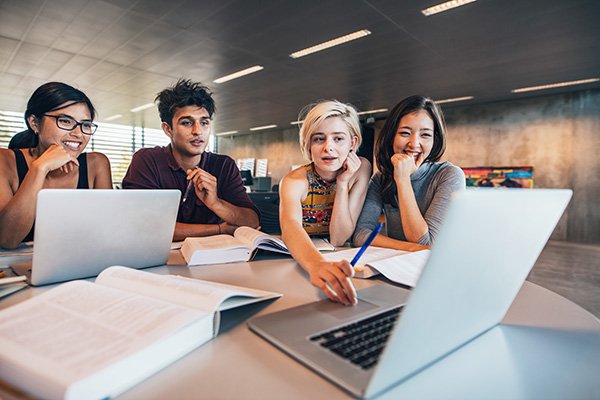
International and intercultural competencies are considered to be of major importance to future graduates in higher education. Yet, the international classroom does not foster these competences automatically; the desired exchange between students with different cultural backgrounds is all too often not taking place. Scholarly research confirms that exposure is not the same as competence.
Although the international classroom offers a great opportunity for students to gain experience in Internationalisation, there are some challenges. If not coupled and mixed, together with focused activities and clear measures, statements that the international classroom produces smarter and more innovative students are risky. Instead of focusing on the specific qualities, lecturers and domestic students alike tend to think in terms of what foreign students are not doing right, on what they fail (to understand). Yet, students from other backgrounds may be very resilient, possess less familiar yet context-relevant knowledge, speak multiple languages, have specific social abilities, etc.
The schools that worked together in this project all three recognized this challenge in their education and decided to join forces in order to tackle the problem.
The aim of this project was to develop instruments for teachers and students for an enhanced use of the cultural capital present in international classrooms.
Instruments for the international classroom
The educational challenge was to recognize and use the abilities and talents for (cultural) learning, global mindset development and contributing to achieving Sustainable Development Goals (SDG). Four instruments were used:
- Transferable techniques for internationalized program and curriculum design
- Providing a learning community where lecturers practice to enact cultural sensitivity (IC-studio)
- A (digital) IC ToolShed with best practices of intercultural effective didactics
- A student survey for measuring the effects of our actions
Formats and research methods used include focus-group discussion, interview and survey. Action-learning was applied in IC studio interventions, classroom observations and IC workshops. Former research in the field of intercultural communication was used for selecting the appropriate concepts, models and theories. The body of knowledge concerning internationalisation of higher education served as general scholarly context for designing approaches and interventions.
The development of the Toolshed was challenging. It took time to figure out the best setup for the Toolshed and to overcome the ICT hurdles (changes to the website structure, setup during the project, etc.). Valuable information on the Toolshed development was obtained during the interactive session with colleagues (webinars Nuffic, Cohehre, and Hanze UAS). During these online sessions Mentimeter is used to interact and obtain valuable input from colleagues for substantive feedback regarding the Toolshed development.
Increased attention for challenges and opportunities
Main outcomes include an increased attention for both the challenges and the opportunities of internationalisation of higher education at Hanze UAS, the practicalities of teaching in a multicultural environment in particular. Internationalisation is finally understood as something beyond teaching in English. Management generally appears as more aware of the effort and skills required among teachers for capitalizing (cultural) diversity in the international classroom.
Among the very practical outcomes are the online availability of teaching materials fit for the international classroom (ToolShed) and professional skills training in the form of IC workshops and train-the-trainer courses. Covid-19 obviously was hindering, yet more in general, work pressure and therefore time allocation and ability to meet remains ’a challenge’.
In existing international classrooms, it appeared to be important to keep focus on how to facilitate so that indeed the benefits for both students and lecturer will be a result of the implementation of those international classrooms and intercultural learning will indeed be one of the learning outcomes.
| Opleiding(en) en aantal studenten waarbij de innovatie is toegepast: | Around 800-1000 students from HanzeHogeschool, School of Health Care Studies, International Business School and Institute for Life Science & Technology |
|---|
| Ontwikkelperiode: | 2019-2022 |
|---|
| Opzet projectteam: | H. Willemsen, RPT
M. van der Poel, Mair International Business School
P. Dammers, Institute for Life Science & Technology
M. Blok, MSc Educational expert School of Health Care Studies
A. Kraster and R. Kloeze, project support
School of Health Care Studies |
|---|
| Bestede aantal ontwikkeluren: | 1670 |
|---|
| Totale budget: | EUR 98.750 |
|---|
Relevante publicaties
- Carroll, J. (2015). Tools for teaching in an educationally mobile world. New York, NY: Routledge
- Deardorff, D. K. (Ed). (2009). The Sage Handbook of Intercultural Competence. Thousand Oakes, CA: Sage Publications
- De Wit, H., & Leask, B. (2015). Internationalization, the curriculum and the disciplines. International higher education, (83), 10-12. https://doi.org/10.6017/ihe.2015.83.9079
- Killick, D. (2015). Developing the global student: Higher education in an era of globalization. New York, NY: Routledge
- Van der Poel, M.H. (2020). Intercultural competence development during study abroad. Rijksuniversiteit Groningen: Groningen. https://doi.org/10.33612/diss.119789093
Producten of presentaties over dit project
Comenius Senior Fellowship 2019