Hoe motiveer je jongeren tijdens je lessen? Hun brein is volop in ontwikkeling. Door aan te sluiten bij deze ontwikkeling, zijn er allerlei kansen om hun motivatie en leerplezier te versterken.
Bijdrage van Anne Visschers (NRO) , Inge de Wolf (NRO) , Peter Roetman (NRO) , Anna van Duijvenvoorde (Universiteit Leiden) Meer informatie
Gepubliceerd:
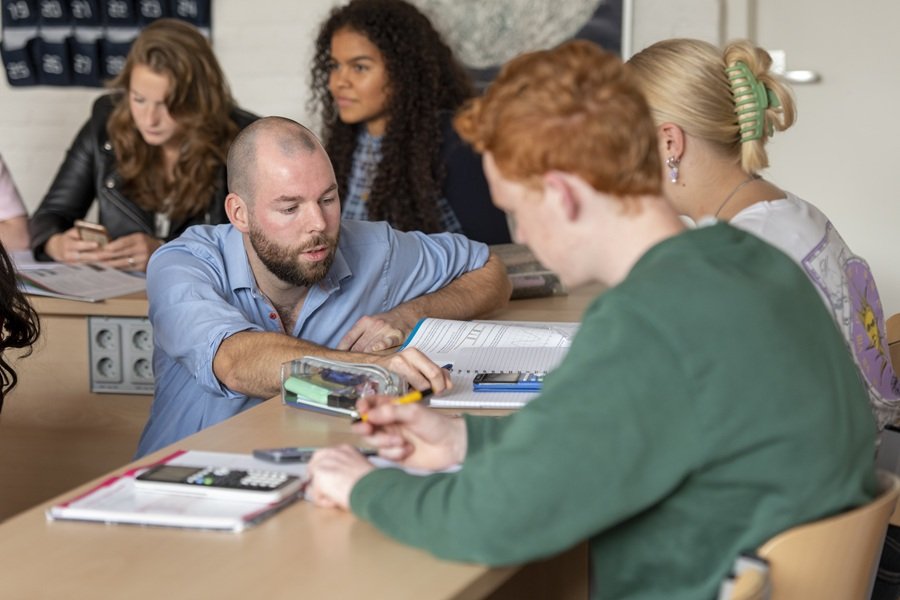
“Hoe krijg ik mijn leerlingen gemotiveerd voor de les?” dat is een vraag die je vast vaker om je heen hoort. In dit artikel gaan we hierop in, met oog voor de ontwikkeling van hun brein. Jongeren zijn geen volwassenen; hun hersenen zijn volop in ontwikkeling. Dat beïnvloedt hoe zij leren, wat hen motiveert en hoe zij school ervaren. Het helpt als je als docent je aanpak aansluit bij de ontwikkeling van het tienerbrein.
Er bestaat geen universele aanpak om de motivatie van leerlingen te versterken. Wel bestaan er kansrijke strategieën om hun motivatie en leerplezier te vergroten, vanuit wat we weten over het tienerbrein. We beschrijven waarom deze strategieën werken en geven tips hoe je deze inzet in de klas.
De wetenschappelijke onderbouwing voor dit artikel is grotendeels gebaseerd op onderzoek onder middelbare scholieren. Hoewel dit generaliseren naar een mbo-context bemoeilijkt, sluit een deel van dit onderzoek aan bij de leeftijdsgroep van mbo-studenten. Dit artikel kan daarom alsnog waardevolle handvatten bieden voor mbo-docenten. Waar leerling staat, kan dus ook student gelezen worden.
Motivatie en het tienerbrein
Om de werkzame mechanismen achter de strategieën te begrijpen, definiëren we eerst wat motivatie is en hoe het werkt in het brein van een tiener.
Wat is motivatie?
Motivatie is wat ons in beweging zet. Het is de energie die ervoor zorgt dat iemand aan iets begint én het volhoudt, of het nu gaat om huiswerk maken, een spreekbeurt voorbereiden of het najagen van een grotere droom
Vu, T., Magis-Weinberg, L., Jansen, B. R., van Atteveldt, N., Janssen, T. W., Lee, N. C., ... & Meeter, M. (2022). Motivation-achievement cycles in learning: A literature review and research agenda. Educational Psychology Review, 34(1), 39-71. https://doi.org/10.1007/s10648-021-09616-7
Motivatie kent verschillende vormen. Het kan van binnenuit komen zoals een leerling die iets echt interessant of leuk vindt. Dat noemen we intrinsieke motivatie. Motivatie kan ook van buitenaf komen, bijvoorbeeld door beloning, straf of sociale druk. Dan gaat het om extrinsieke motivatie
Hidi, S. (2016). Revisiting the role of rewards in motivation and learning: Implications of neuroscientific research. Educational Psychology Review, 28(1), 61-93. https://doi.org/10.1007/s10648-015-9307-5
Voor sommige activiteiten kunnen leerlingen zowel intrinsiek als extrinsiek gemotiveerd worden. Motivatie is geen vaste eigenschap, maar iets dat voortdurend verandert en afhankelijk is van interacties met de omgeving. Of iemand gemotiveerd is om ergens tijd en moeite in te steken hangt af van verschillende factoren. Denk bijvoorbeeld aan eerdere ervaringen, iemands talenten, de omgeving waarin iets gebeurt, én het doel dat iemand voor ogen heeft
Urhahne, D., & Wijnia, L. (2023). Theories of motivation in education: An integrative framework. Educational Psychology Review, 35, 45. https://doi.org/10.1007/s10648-023-09767-9
Vu, T., Magis-Weinberg, L., Jansen, B. R., van Atteveldt, N., Janssen, T. W., Lee, N. C., ... & Meeter, M. (2022). Motivation-achievement cycles in learning: A literature review and research agenda. Educational Psychology Review, 34(1), 39-71. https://doi.org/10.1007/s10648-021-09616-7
Dit artikel richt zich op motivatie voor de les. Hieronder verstaan we actieve deelname aan de les: leerlingen tonen interesse, stellen vragen en reageren op aanwijzingen van de docent. Gemotiveerde leerlingen zijn doorgaans met hun opdracht bezig, laten zich minder snel afleiden en hebben hun aandacht bij de les.
Hoe werkt motivatie in de hersenen?
Hersenen blijven zich ontwikkelen tot ver in de vroege volwassenheid
Giedd, J. N., Blumenthal, J., Jeffries, N. O., Castellanos, F. X., Liu, H., Zijdenbos, A., ... & Rapoport, J. L. (1999). Brain development during childhood and adolescence: A longitudinal MRI study. Nature Neuroscience, 2(10), 861-863. https://doi.org/10.1038/13158
Gogtay, N., Giedd, J. N., Lusk, L., Hayashi, K. M., Greenstein, D., Vaituzis, A. C., ... & Thompson, P. M. (2004). Dynamic mapping of human cortical development during childhood through early adulthood. Proceedings of the National Academy of Sciences, 101(21), 8174-8179. https://doi.org/10.1073/pnas.0402680101
Tamnes, C. K., Herting, M. M., Goddings, A. L., Meuwese, R., Blakemore, S. J., Dahl, R. E., ... & Mills, K. L. (2017). Development of the cerebral cortex across adolescence: A multisample study of inter-related longitudinal changes in cortical volume, surface area, and thickness. Journal of Neuroscience, 37(12), 3402-3412. https://doi.org/10.1523/JNEUROSCI.3302-16.2017
Hersenonderzoek toont aan dat met name de prefrontale cortex trager rijpt dan hersengebieden die betrokken zijn bij emoties
Casey, B. J., Jones, R. M., & Somerville, L. H. (2011). Braking and accelerating of the adolescent brain. Journal of Research on Adolescence, 21(1), 21-33. https://doi.org/10.1111/j.1532-7795.2010.00712.x
Somerville, L. H., & Casey, B. (2010). Developmental neurobiology of cognitive control and motivational systems. Current Opinion in Neurobiology, 20(2), 236-241. https://doi.org/10.1016/j.conb.2010.01.006
De prefrontale cortex is het hersengebied dat betrokken is bij plannen, zelfcontrole en het overzien van gevolgen. Aangezien dit hersengebied bij jongeren nog in ontwikkeling is, kunnen ze hun emoties en impulsen minder goed reguleren dan volwassenen. Dit zou kunnen verklaren waarom jongeren:
- vaker risico’s nemen
Defoe, I. N., Dubas, J. S., Figner, B., & Van Aken, M. A. (2015). A meta-analysis on age differences in risky decision making: Adolescents versus children and adults. Psychological Bulletin, 141(1), 48. https://doi.org/10.1037/a0038088
Steinberg, L., (2010). A social neuroscience perspective on adolescent risk-taking. In K. Beaver, (Ed.), Biosocial Theories of Crime (1st ed.). Routledge. https://doi.org/10.4324/9781315096278
- sneller afgeleid zijn
Luna, B., Garver, K. E., Urban, T. A., Lazar, N. A., & Sweeney, J. A. (2004). Maturation of cognitive processes from late childhood to adulthood. Child Development, 75(5), 1357-1372. https://doi.org/10.1111/j.1467-8624.2004.00745.x
Roper, Z. J., Vecera, S. P., & Vaidya, J. G. (2014). Value-driven attentional capture in adolescence. Psychological Science, 25(11), 1987-1993. https://doi.org/10.1177/0956797614545654
- heftiger reageren op prikkels uit hun omgeving
Somerville, L. H., Hare, T., & Casey, B. (2011). Frontostriatal maturation predicts cognitive control failure to appetitive cues in adolescents. Journal of Cognitive Neuroscience, 23(9), 2123-2134. https://doi.org/10.1162/jocn.2010.21572
- moeite hebben met het overzien van de langetermijngevolgen van hun gedrag
Achterberg, M., Peper, J. S., van Duijvenvoorde, A. C., Mandl, R. C., & Crone, E. A. (2016). Frontostriatal white matter integrity predicts development of delay of gratification: A longitudinal study. Journal of Neuroscience, 36(6), 1954-1961. https://doi.org/10.1523/JNEUROSCI.3459-15.2016
Crone, E., & Dahl, R. (2012). Understanding adolescence as a period of social–affective engagement and goal flexibility. Nature Reviews Neuroscience 13, 636-650. https://doi.org/10.1038/nrn3313
Hierdoor dachten onderzoekers tot voor kort dat problemen bij jongeren, zoals lage motivatie in de les, vooral voortkwamen uit verschillen in de rijping van hersengebieden. Recentere inzichten laten echter zien dat deze eerdere verklaring van een ‘onrijpe prefrontale cortex’ te simplistisch is
Crone, E., & Dahl, R. (2012). Understanding adolescence as a period of social–affective engagement and goal flexibility. Nature Reviews Neuroscience 13, 636-650. https://doi.org/10.1038/nrn3313
Het blijkt namelijk dat de prefrontale cortex prima kan functioneren, maar dat het tienerbrein selectief gemotiveerd is. De activatie van de prefrontale cortex hangt bij jongeren sterker af van de context en van hun motivatie op dat moment. Factoren die hierbij een rol spelen zijn bijvoorbeeld of leeftijdsgenoten aanwezig zijn, hoe de opdracht wordt aangeboden of uitgelegd, of de opdracht als zinvol en belangrijk wordt ervaren en welke emoties er worden opgeroepen. Jongeren kunnen soms prima plannen en zelfreguleren wanneer de situatie voor hen relevant en betekenisvol is. Zo kan het zijn dat een leerling weinig motivatie voelt om voor een diploma te werken, omdat hij of zij de waarde ervan (nog) niet inziet
Lee, N. C., de Groot, R. H., Boschloo, A., Dekker, S., Krabbendam, L., & Jolles, J. (2013). Age and educational track influence adolescent discounting of delayed rewards. Frontiers in Psychology, 4, 993. https://doi.org/10.3389/fpsyg.2013.00993
De motivatie voor datzelfde diploma kan echter sterk toenemen wanneer het wordt gezien als een opstap naar een vakgebied waarvoor de leerling al passie heeft. Denk bijvoorbeeld aan een leerling die van auto’s houdt en voor wie het diploma de weg opent naar het beroep automonteur.
De tienertijd is een uitgelezen kans om vaardigheden en competenties aan te leren. Het brein is volop in ontwikkeling en bijzonder veranderbaar. Een tienerbrein is zeer gevoelig voor ervaringen en oefening, waarbij verbindingen tussen hersengebieden worden versterkt door herhaling
Somerville, L. H. (2016). Searching for signatures of brain maturity: What are we searching for?. Neuron, 92(6), 1164-1167. https://doi.org/10.1016/j.neuron.2016.10.059
Van Duijvenvoorde, A. C. K., Whitmore, L. B., Westhoff, B., & Mills, K. L. (2022). A methodological perspective on learning in the developing brain. npj Science of Learning, 7(1), 12. https://doi.org/10.1038/s41539-022-00127-w
Het is nog niet af, maar het leert razendsnel, vooral als het goed begeleid wordt. Wij bespreken vier strategieën die je als docent hiervoor kunt inzetten.
Strategie 1: Beloningen als positieve bekrachtiging
Beloningen werken in de breedste zin van het woord. In feite gaat het om alle vormen van beloningen, waarbij gedrag versterkt wordt door erkenning en aanmoediging. Het gaat dus verder dan extra punten voor een toets, minder huiswerk of iets lekkers uitdelen. Juist verbale en non-verbale vormen van waardering, zoals een compliment, een knikje of een aanwijzing, zijn effectief én duurzaam.
De term ‘positieve bekrachtiging’ wordt ook wel gebruikt, als alternatief voor het woord ‘beloning’. Positieve bekrachtiging refereert naar een proces, een proces waarin gewenst gedrag wordt aangemoedigd. Een beloning is een middel en verwijst naar een handeling of ding die als bekrachtiger kan werken, maar dit hoeft niet altijd het geval te zijn. Of een beloning daadwerkelijk gewenst gedrag bekrachtigt hangt namelijk af van de individu en de context. Hier leggen we uit hoe je beloningen kan inzetten als positieve bekrachtiger.
Geraadpleegde bronnen
Vu, T., Magis-Weinberg, L., Jansen, B. R., van Atteveldt, N., Janssen, T. W., Lee, N. C., ... & Meeter, M. (2022). Motivation-achievement cycles in learning: A literature review and research agenda. Educational Psychology Review, 34(1), 39-71. https://doi.org/10.1007/s10648-021-09616-7Hidi, S. (2016). Revisiting the role of rewards in motivation and learning: Implications of neuroscientific research. Educational Psychology Review, 28(1), 61-93. https://doi.org/10.1007/s10648-015-9307-5
Urhahne, D., & Wijnia, L. (2023). Theories of motivation in education: An integrative framework. Educational Psychology Review, 35, 45. https://doi.org/10.1007/s10648-023-09767-9
Vu, T., Magis-Weinberg, L., Jansen, B. R., van Atteveldt, N., Janssen, T. W., Lee, N. C., ... & Meeter, M. (2022). Motivation-achievement cycles in learning: A literature review and research agenda. Educational Psychology Review, 34(1), 39-71. https://doi.org/10.1007/s10648-021-09616-7
Giedd, J. N., Blumenthal, J., Jeffries, N. O., Castellanos, F. X., Liu, H., Zijdenbos, A., ... & Rapoport, J. L. (1999). Brain development during childhood and adolescence: A longitudinal MRI study. Nature Neuroscience, 2(10), 861-863. https://doi.org/10.1038/13158
Gogtay, N., Giedd, J. N., Lusk, L., Hayashi, K. M., Greenstein, D., Vaituzis, A. C., ... & Thompson, P. M. (2004). Dynamic mapping of human cortical development during childhood through early adulthood. Proceedings of the National Academy of Sciences, 101(21), 8174-8179. https://doi.org/10.1073/pnas.0402680101
Tamnes, C. K., Herting, M. M., Goddings, A. L., Meuwese, R., Blakemore, S. J., Dahl, R. E., ... & Mills, K. L. (2017). Development of the cerebral cortex across adolescence: A multisample study of inter-related longitudinal changes in cortical volume, surface area, and thickness. Journal of Neuroscience, 37(12), 3402-3412. https://doi.org/10.1523/JNEUROSCI.3302-16.2017
Casey, B. J., Jones, R. M., & Somerville, L. H. (2011). Braking and accelerating of the adolescent brain. Journal of Research on Adolescence, 21(1), 21-33. https://doi.org/10.1111/j.1532-7795.2010.00712.x
Somerville, L. H., & Casey, B. (2010). Developmental neurobiology of cognitive control and motivational systems. Current Opinion in Neurobiology, 20(2), 236-241. https://doi.org/10.1016/j.conb.2010.01.006
Defoe, I. N., Dubas, J. S., Figner, B., & Van Aken, M. A. (2015). A meta-analysis on age differences in risky decision making: Adolescents versus children and adults. Psychological Bulletin, 141(1), 48. https://doi.org/10.1037/a0038088
Steinberg, L., (2010). A social neuroscience perspective on adolescent risk-taking. In K. Beaver, (Ed.), Biosocial Theories of Crime (1st ed.). Routledge. https://doi.org/10.4324/9781315096278
Luna, B., Garver, K. E., Urban, T. A., Lazar, N. A., & Sweeney, J. A. (2004). Maturation of cognitive processes from late childhood to adulthood. Child Development, 75(5), 1357-1372. https://doi.org/10.1111/j.1467-8624.2004.00745.x
Roper, Z. J., Vecera, S. P., & Vaidya, J. G. (2014). Value-driven attentional capture in adolescence. Psychological Science, 25(11), 1987-1993. https://doi.org/10.1177/0956797614545654
Somerville, L. H., Hare, T., & Casey, B. (2011). Frontostriatal maturation predicts cognitive control failure to appetitive cues in adolescents. Journal of Cognitive Neuroscience, 23(9), 2123-2134. https://doi.org/10.1162/jocn.2010.21572
Achterberg, M., Peper, J. S., van Duijvenvoorde, A. C., Mandl, R. C., & Crone, E. A. (2016). Frontostriatal white matter integrity predicts development of delay of gratification: A longitudinal study. Journal of Neuroscience, 36(6), 1954-1961. https://doi.org/10.1523/JNEUROSCI.3459-15.2016
Crone, E., & Dahl, R. (2012). Understanding adolescence as a period of social–affective engagement and goal flexibility. Nature Reviews Neuroscience 13, 636-650. https://doi.org/10.1038/nrn3313
Crone, E., & Dahl, R. (2012). Understanding adolescence as a period of social–affective engagement and goal flexibility. Nature Reviews Neuroscience 13, 636-650. https://doi.org/10.1038/nrn3313
Lee, N. C., de Groot, R. H., Boschloo, A., Dekker, S., Krabbendam, L., & Jolles, J. (2013). Age and educational track influence adolescent discounting of delayed rewards. Frontiers in Psychology, 4, 993. https://doi.org/10.3389/fpsyg.2013.00993
Somerville, L. H. (2016). Searching for signatures of brain maturity: What are we searching for?. Neuron, 92(6), 1164-1167. https://doi.org/10.1016/j.neuron.2016.10.059
Van Duijvenvoorde, A. C. K., Whitmore, L. B., Westhoff, B., & Mills, K. L. (2022). A methodological perspective on learning in the developing brain. npj Science of Learning, 7(1), 12. https://doi.org/10.1038/s41539-022-00127-w
Beloningen en het brein
Het tienerbrein reageert sterk op directe beloningen
Galván, A. (2010). Adolescent development of the reward system. Frontiers in Human Neuroscience, 4, 1018. https://doi.org/10.3389/neuro.09.006.2010
Lee, N. C., de Groot, R. H., Boschloo, A., Dekker, S., Krabbendam, L., & Jolles, J. (2013). Age and educational track influence adolescent discounting of delayed rewards. Frontiers in Psychology, 4, 993. https://doi.org/10.3389/fpsyg.2013.00993
Het beloningsnetwerk in de hersenen maakt het mogelijk om plezier, motivatie en leerervaringen te koppelen aan bepaald gedrag
Schultz, W. (2015). Neuronal reward and decision signals: From theories to data. Physiological Reviews, 95(3), 853-951. https://doi.org/10.1152/physrev.00023.2014
Deze koppeling zorgt ervoor dat we gedrag dat leidt tot iets positiefs, zoals succes, erkenning, eten of sociale waardering, onthouden en willen herhalen. De gevoeligheid van adolescenten voor beloningen kan een krachtig middel zijn om selectieve motivatie te versterken. Als docent kan je hier positief op inspelen door beloningen bewust in te zetten om de betrokkenheid bij het leren te vergroten.
Geraadpleegde bronnen
Galván, A. (2010). Adolescent development of the reward system. Frontiers in Human Neuroscience, 4, 1018. https://doi.org/10.3389/neuro.09.006.2010Lee, N. C., de Groot, R. H., Boschloo, A., Dekker, S., Krabbendam, L., & Jolles, J. (2013). Age and educational track influence adolescent discounting of delayed rewards. Frontiers in Psychology, 4, 993. https://doi.org/10.3389/fpsyg.2013.00993
Schultz, W. (2015). Neuronal reward and decision signals: From theories to data. Physiological Reviews, 95(3), 853-951. https://doi.org/10.1152/physrev.00023.2014
Een compliment is extra krachtig wanneer het oprecht is. Ook kan het goed worden gecombineerd met een concrete tip. Het is daarnaast belangrijk om niet alleen het resultaat te complimenteren, maar juist de inzet en het proces te waarderen, omdat dit leerlingen helpt om door te zetten, ook als iets nog niet lukt
Dweck, C. S. (2006). Mindset: The new psychology of success. Random house.
Mueller, C. M., & Dweck, C. S. (1998). Praise for intelligence can undermine children's motivation and performance. Journal of Personality and Social Psychology, 75(1), 33-52. https://doi.org/10.1037/0022-3514.75.1.33
Bijvoorbeeld: "Je hebt goed geoefend met de vervoegingen. Vergeet niet op de spelling te letten."
Bij beloning is het belangrijk te kijken naar de beginsituatie van de leerling
Hidi, S. (2016). Revisiting the role of rewards in motivation and learning: Implications of neuroscientific research. Educational Psychology Review, 28(1), 61-93. https://doi.org/10.1007/s10648-015-9307-5
Bij leerlingen die nog weinig motivatie of betrokkenheid tonen, vormen beloningen een zinvolle opstap. Ze helpen om drempels te verlagen bij taken die aanvankelijk als saai of oninteressant worden ervaren. Bij leerlingen die al intrinsiek gemotiveerd zijn, kan het geven van beloningen juist averechts werken
Deci, E. L., Ryan, R. M., & Koestner, R. (2001). The pervasive negative effects of rewards on intrinsic motivation: Response to Cameron(2001). Review of Educational Research, 71(1), 43-51. https://doi.org/10.3102/00346543071001043
Vansteenkiste, M., Niemiec, C. P., & Soenens, B. (2010). The development of the five mini-theories of self-determination theory: An historical overview, emerging trends, and future directions. In T. C. Urdan & S. A. Karabenick (Eds.), The decade ahead: Theoretical perspectives on motivation and achievement (Vol. 16, pp. 105–165). Emerald Group Publishing. https://doi.org/10.1108/S0749-7423(2010)000016A007
Hun aandacht verschuift dan van het plezier in de taak zelf naar het verkrijgen van een beloning. Valt die beloning bij intrinsiek gemotiveerde leerlingen weg, dan kan ook hun inzet afnemen.
Beloningen zijn ook minder effectief als ze worden ingezet op een manier die als dwingend wordt ervaren, bijvoorbeeld als ‘voorwaarde’ of in combinatie met straf. Dit kan het gevoel van autonomie en competentie ondermijnen, en daarmee juist de motivatie schaden
Deci, E. L., Ryan, R. M., & Koestner, R. (2001). The pervasive negative effects of rewards on intrinsic motivation: Response to Cameron(2001). Review of Educational Research, 71(1), 43-51. https://doi.org/10.3102/00346543071001043
Vansteenkiste, M., Niemiec, C. P., & Soenens, B. (2010). The development of the five mini-theories of self-determination theory: An historical overview, emerging trends, and future directions. In T. C. Urdan & S. A. Karabenick (Eds.), The decade ahead: Theoretical perspectives on motivation and achievement (Vol. 16, pp. 105–165). Emerald Group Publishing. https://doi.org/10.1108/S0749-7423(2010)000016A007
Zo is het geen goed idee om leerlingen die hun huiswerk af hebben te belonen met minder huiswerk en ze te straffen met een extra toets als ze hun huiswerk niet hebben gemaakt. Ook beloningen die worden onthouden bij falen kunnen demotiverend werken
Hidi, S. (2016). Revisiting the role of rewards in motivation and learning: Implications of neuroscientific research. Educational Psychology Review, 28(1), 61-93. https://doi.org/10.1007/s10648-015-9307-5
Ryan, R. M., Deci, E. L., Vansteenkiste, M., & Soenens, B. (2021). Building a science of motivated persons: Self-determination theory’s empirical approach to human experience and the regulation of behavior. Motivation Science, 7(2), 97-110. https://doi.org/10.1037/mot0000194
Denk hier aan het belonen van goed gedrag in een klas door aan het einde van les een quiz te houden. Als de leerlingen zich niet goed hebben ingezet, wordt er gekozen voor zelfstandig werken.
Beloningen werken dus goed bij tieners, mits juist toegepast. Hierbij enkele concrete tips voor het gebruik van beloningen in de klas:
1. Beloningen koppelen aan inzet en doelen
Beloningen werken het best wanneer ze worden gegeven voor een concrete en betekenisvolle prestatie, en niet voor vanzelfsprekende zaken, zoals op je stoel blijven zitten of de les niet verstoren
Hidi, S. (2016). Revisiting the role of rewards in motivation and learning: Implications of neuroscientific research. Educational Psychology Review, 28(1), 61-93. https://doi.org/10.1007/s10648-015-9307-5
Leerlingen zijn gemotiveerder wanneer ze duidelijke doelen hebben en geloven dat hun inzet verschil maakt
Pekrun, R. (2017). Emotion and achievement during adolescence. Child Development Perspectives, 11(3), 215-221. https://doi.org/10.1111/cdep.12237
Bijvoorbeeld als ze zelf het nut inzien van een leerstrategie die hen helpt hun doel te bereiken. Als docent kun je hierop inspelen door leerlingen heldere doelen voor te houden (zoals het beheersen van een vaardigheid of thuis elke dag tien nieuwe woordjes leren) en gerichte beloningen te geven wanneer ze deze doelen behalen.
2. Positieve feedback als beloning
Positieve feedback verhoogt de motivatie; zelfs bij leerlingen die al intrinsiek gemotiveerd zijn
Vu, T., Magis-Weinberg, L., Jansen, B. R., van Atteveldt, N., Janssen, T. W., Lee, N. C., ... & Meeter, M. (2022). Motivation-achievement cycles in learning: A literature review and research agenda. Educational Psychology Review, 34(1), 39-71. https://doi.org/10.1007/s10648-021-09616-7
Jongeren reageren bovendien sterker op positieve dan op negatieve feedback
Van Duijvenvoorde, A. C. K., Zanolie, K., Rombouts, S. A. R. B., Raijmakers, M. E. J., & Crone, E. A. (2008). Evaluating the negative or valuing the positive? Neural mechanisms supporting feedback-based learning across development. The Journal of Neuroscience, 28(38), 9495-9503. https://doi.org/10.1523/JNEUROSCI.1485-08.2008
Daarom wordt geadviseerd om voor elke negatieve uiting meerdere positieve uitingen van feedback te geven
Cook, C. R., Grady, E. A., Long, A. C., Renshaw, T., Codding, R. S., Fiat, A., & Larson, M. (2017). Evaluating the impact of increasing general education teachers’ ratio of positive-to-negative interactions on students’ classroom behavior. Journal of Positive Behavior Interventions, 19(2), 67-77. https://psycnet.apa.org/doi/10.1177/1098300716679137
Lees ook
Overzichtsartikel over effectieve feedback in de klas
3. Onverwachte beloningen
Beloningen die niet vooraf zijn aangekondigd, kunnen effectief zijn voor zowel ongemotiveerde als gemotiveerde leerlingen
Hidi, S. (2016). Revisiting the role of rewards in motivation and learning: Implications of neuroscientific research. Educational Psychology Review, 28(1), 61-93. https://doi.org/10.1007/s10648-015-9307-5
Vansteenkiste, M., Niemiec, C. P., & Soenens, B. (2010). The development of the five mini-theories of self-determination theory: An historical overview, emerging trends, and future directions. In T. C. Urdan & S. A. Karabenick (Eds.), The decade ahead: Theoretical perspectives on motivation and achievement (Vol. 16, pp. 105–165). Emerald Group Publishing. https://doi.org/10.1108/S0749-7423(2010)000016A007
Een andere variant is door loting een prijs bepalen wanneer de gehele klas goed heeft gepresteerd
Davis, J. L., King, H. C., Radley, K. C., Corsi, C. M., Jensen, H. J., & Jenson, W. R. (2024). The mystery motivator intervention for challenging behavior: A meta-analysis. Journal of Positive Behavior Interventions, 26(2), 113-127. https://doi.org/10.1177/10983007231224048
Putnam, R. F., Handler, M. W., Ramirez‐Platt, C. M., & Luiselli, J. K. (2003). Improving student bus‐riding behavior through a whole‐school intervention. Journal of Applied Behavior Analysis, 36(4), 583-590. https://doi.org/10.1901/jaba.2003.36-583
Deze beloning is onverwacht omdat de leerlingen niet van tevoren weten wat de beloning zal zijn. Voorbeelden van beloningen zijn keuzes in lesactiviteiten (bijv., een filmpje kijken vs. een quiz doen) of gebruik mogen maken van gymfaciliteiten tijdens de lunchpauze. Een aanvullende strategie is om een lijst met geschikte beloningen samen met de leerlingen op te stellen. Op deze manier sluit de beloning optimaal aan bij hun belevingswereld
Davis, J. L., King, H. C., Radley, K. C., Corsi, C. M., Jensen, H. J., & Jenson, W. R. (2024). The mystery motivator intervention for challenging behavior: A meta-analysis. Journal of Positive Behavior Interventions, 26(2), 113-127. https://doi.org/10.1177/10983007231224048
4. Sociale beloningen
Sociale beloningen, zoals erkenning binnen de groep of verantwoordelijkheid krijgen, kunnen sterk motiverend werken (bijv.,
Campbell, R., Starkey, F., Holliday, J., Audrey, S., Bloor, M., Parry-Langdon, N., Hughes, R. & Moore, L. (2008). An informal school-based peer-led intervention for smoking prevention in adolescence (ASSIST): A cluster randomised trial. The Lancet, 371(9624), 1595-1602. https://doi.org/10.1016/s0140-6736(08)60692-3
Paluck, E. L., Shepherd, H., & Aronow, P. M. (2016). Changing climates of conflict: A social network experiment in 56 schools. Proceedings of the National Academy of Sciences, 113(3), 566-571. https://doi.org/10.1073/pnas.1514483113
Leerlingen kunnen worden uitgedaagd om in groepsverband met oplossingen te komen voor problemen, zoals bij pesten en conflicten op school. Deze actieve groep kan vervolgens worden aangemoedigd om een herkenbare aanwezigheid in de school te worden, bijvoorbeeld door middel van armbandjes of een online-aanwezigheid.
Strategie 2: De sociale omgeving inzetten
Jongeren zijn sterk gericht op hun sociale omgeving. Positieve sociale relaties in de klas bevorderen het welzijn en de motivatie van leerlingen. Een gevoel van verbondenheid binnen de groep is een belangrijke voorwaarde voor motivatie
Yeager, D. S., & Walton, G. M. (2011). Social-psychological interventions in education: They’re not magic. Review of Educational Research, 81(2), 267-301. https://doi.org/10.3102/0034654311405999
Ook draagt een positieve en veilige klas- en schoolcultuur bij aan betere leerprestaties en grotere betrokkenheid, vooral wanneer deze bewust inspeelt op de gevoeligheid van leerlingen voor status, respect en doelgerichtheid
Dahl, R. E., Allen, N. B., Wilbrecht, L., & Suleiman, A. B. (2018). Importance of investing in adolescence from a developmental science perspective. Nature, 554(7693), 441-450. https://doi.org/10.1038/nature25770
Korpershoek, H., Canrinus, E. T., Fokkens-Bruinsma, M., & De Boer, H. (2020). The relationships between school belonging and students’ motivational, social-emotional, behavioural, and academic outcomes in secondary education: A meta-analytic review. Research Papers in Education, 35(6), 641-680.
Wubbels, T., Brekelmans, J. M. G., Mainhard, T., den Brok, P. J., & van Tartwijk, J. W. F. (2016). Teacher-student relationships and student achievement. In K. Wentzel, & G. Ramani (Eds.), Handbook of social influences in school contexts: social-emotional, motivation, and cognitive outcomes (pp. 127-142). Taylor and Francis.
Geraadpleegde bronnen
Dweck, C. S. (2006). Mindset: The new psychology of success. Random house.Mueller, C. M., & Dweck, C. S. (1998). Praise for intelligence can undermine children's motivation and performance. Journal of Personality and Social Psychology, 75(1), 33-52. https://doi.org/10.1037/0022-3514.75.1.33
Hidi, S. (2016). Revisiting the role of rewards in motivation and learning: Implications of neuroscientific research. Educational Psychology Review, 28(1), 61-93. https://doi.org/10.1007/s10648-015-9307-5
Deci, E. L., Ryan, R. M., & Koestner, R. (2001). The pervasive negative effects of rewards on intrinsic motivation: Response to Cameron(2001). Review of Educational Research, 71(1), 43-51. https://doi.org/10.3102/00346543071001043
Vansteenkiste, M., Niemiec, C. P., & Soenens, B. (2010). The development of the five mini-theories of self-determination theory: An historical overview, emerging trends, and future directions. In T. C. Urdan & S. A. Karabenick (Eds.), The decade ahead: Theoretical perspectives on motivation and achievement (Vol. 16, pp. 105–165). Emerald Group Publishing. https://doi.org/10.1108/S0749-7423(2010)000016A007
Hidi, S. (2016). Revisiting the role of rewards in motivation and learning: Implications of neuroscientific research. Educational Psychology Review, 28(1), 61-93. https://doi.org/10.1007/s10648-015-9307-5
Ryan, R. M., Deci, E. L., Vansteenkiste, M., & Soenens, B. (2021). Building a science of motivated persons: Self-determination theory’s empirical approach to human experience and the regulation of behavior. Motivation Science, 7(2), 97-110. https://doi.org/10.1037/mot0000194
Hidi, S. (2016). Revisiting the role of rewards in motivation and learning: Implications of neuroscientific research. Educational Psychology Review, 28(1), 61-93. https://doi.org/10.1007/s10648-015-9307-5
Pekrun, R. (2017). Emotion and achievement during adolescence. Child Development Perspectives, 11(3), 215-221. https://doi.org/10.1111/cdep.12237
Vu, T., Magis-Weinberg, L., Jansen, B. R., van Atteveldt, N., Janssen, T. W., Lee, N. C., ... & Meeter, M. (2022). Motivation-achievement cycles in learning: A literature review and research agenda. Educational Psychology Review, 34(1), 39-71. https://doi.org/10.1007/s10648-021-09616-7
Van Duijvenvoorde, A. C. K., Zanolie, K., Rombouts, S. A. R. B., Raijmakers, M. E. J., & Crone, E. A. (2008). Evaluating the negative or valuing the positive? Neural mechanisms supporting feedback-based learning across development. The Journal of Neuroscience, 28(38), 9495-9503. https://doi.org/10.1523/JNEUROSCI.1485-08.2008
Cook, C. R., Grady, E. A., Long, A. C., Renshaw, T., Codding, R. S., Fiat, A., & Larson, M. (2017). Evaluating the impact of increasing general education teachers’ ratio of positive-to-negative interactions on students’ classroom behavior. Journal of Positive Behavior Interventions, 19(2), 67-77. https://psycnet.apa.org/doi/10.1177/1098300716679137
Hidi, S. (2016). Revisiting the role of rewards in motivation and learning: Implications of neuroscientific research. Educational Psychology Review, 28(1), 61-93. https://doi.org/10.1007/s10648-015-9307-5
Vansteenkiste, M., Niemiec, C. P., & Soenens, B. (2010). The development of the five mini-theories of self-determination theory: An historical overview, emerging trends, and future directions. In T. C. Urdan & S. A. Karabenick (Eds.), The decade ahead: Theoretical perspectives on motivation and achievement (Vol. 16, pp. 105–165). Emerald Group Publishing. https://doi.org/10.1108/S0749-7423(2010)000016A007
Davis, J. L., King, H. C., Radley, K. C., Corsi, C. M., Jensen, H. J., & Jenson, W. R. (2024). The mystery motivator intervention for challenging behavior: A meta-analysis. Journal of Positive Behavior Interventions, 26(2), 113-127. https://doi.org/10.1177/10983007231224048
Putnam, R. F., Handler, M. W., Ramirez‐Platt, C. M., & Luiselli, J. K. (2003). Improving student bus‐riding behavior through a whole‐school intervention. Journal of Applied Behavior Analysis, 36(4), 583-590. https://doi.org/10.1901/jaba.2003.36-583
Davis, J. L., King, H. C., Radley, K. C., Corsi, C. M., Jensen, H. J., & Jenson, W. R. (2024). The mystery motivator intervention for challenging behavior: A meta-analysis. Journal of Positive Behavior Interventions, 26(2), 113-127. https://doi.org/10.1177/10983007231224048
Campbell, R., Starkey, F., Holliday, J., Audrey, S., Bloor, M., Parry-Langdon, N., Hughes, R. & Moore, L. (2008). An informal school-based peer-led intervention for smoking prevention in adolescence (ASSIST): A cluster randomised trial. The Lancet, 371(9624), 1595-1602. https://doi.org/10.1016/s0140-6736(08)60692-3
Paluck, E. L., Shepherd, H., & Aronow, P. M. (2016). Changing climates of conflict: A social network experiment in 56 schools. Proceedings of the National Academy of Sciences, 113(3), 566-571. https://doi.org/10.1073/pnas.1514483113
Yeager, D. S., & Walton, G. M. (2011). Social-psychological interventions in education: They’re not magic. Review of Educational Research, 81(2), 267-301. https://doi.org/10.3102/0034654311405999
Dahl, R. E., Allen, N. B., Wilbrecht, L., & Suleiman, A. B. (2018). Importance of investing in adolescence from a developmental science perspective. Nature, 554(7693), 441-450. https://doi.org/10.1038/nature25770
Korpershoek, H., Canrinus, E. T., Fokkens-Bruinsma, M., & De Boer, H. (2020). The relationships between school belonging and students’ motivational, social-emotional, behavioural, and academic outcomes in secondary education: A meta-analytic review. Research Papers in Education, 35(6), 641-680.
Wubbels, T., Brekelmans, J. M. G., Mainhard, T., den Brok, P. J., & van Tartwijk, J. W. F. (2016). Teacher-student relationships and student achievement. In K. Wentzel, & G. Ramani (Eds.), Handbook of social influences in school contexts: social-emotional, motivation, and cognitive outcomes (pp. 127-142). Taylor and Francis.
Het sociale brein
Het brein van jongeren is gevoeliger dan dat van volwassenen voor sociale status en respect binnen de groep
Güroğlu, B., & Veenstra, R. (2021). Neural underpinnings of peer experiences and interactions: A review of social neuroscience research. Merrill-Palmer Quarterly, 67(4), 416-456. https://doi.org/10.1353/mpq.2021.0021
Dit beïnvloedt hun gedrag en motivatie sterk
Wubbels, T., Brekelmans, J. M. G., Mainhard, T., den Brok, P. J., & van Tartwijk, J. W. F. (2016). Teacher-student relationships and student achievement. In K. Wentzel, & G. Ramani (Eds.), Handbook of social influences in school contexts: social-emotional, motivation, and cognitive outcomes (pp. 127-142). Taylor and Francis.
Het sociale brein, een netwerk van verschillende hersengebieden, maakt het mogelijk om jezelf te kunnen verplaatsen in anderen, het gedrag van anderen te begrijpen en te bepalen of een taak als relevant wordt ervaren
Andrews, J. L., Ahmed, S. P., & Blakemore, S. J. (2021). Navigating the social environment in adolescence: The role of social brain development. Biological psychiatry, 89(2), 109-118. https://doi.org/10.1016/j.biopsych.2020.09.012
In de adolescentie is dit netwerk extra belangrijk, omdat deze periode gepaard gaat met ingrijpende veranderingen in sociale relaties. Leeftijdsgenoten worden belangrijker, vriendschappen verdiepen zich en de behoefte om erbij te horen groeit. Acceptatie of afwijzing door leeftijdsgenoten vormt een belangrijke sociale drijfveer
Crone, E., & Dahl, R. (2012). Understanding adolescence as a period of social–affective engagement and goal flexibility. Nature Reviews Neuroscience 13, 636-650. https://doi.org/10.1038/nrn3313
Dahl, R. E., Allen, N. B., Wilbrecht, L., & Suleiman, A. B. (2018). Importance of investing in adolescence from a developmental science perspective. Nature, 554(7693), 441-450. https://doi.org/10.1038/nature25770
Silvestrini, N., Musslick, S., Berry, A. S., & Vassena, E. (2023). An integrative effort: Bridging motivational intensity theory and recent neurocomputational and neuronal models of effort and control allocation. Psychological Review, 130(4), 1081-1103. https://doi.org/10.1037/rev0000372
Jongeren zijn dan ook extra gemotiveerd om gedrag te vertonen dat sociale waardering oplevert, waarbij langetermijngevolgen minder worden meegewogen
Crone, E., & Dahl, R. (2012). Understanding adolescence as a period of social–affective engagement and goal flexibility. Nature Reviews Neuroscience 13, 636-650. https://doi.org/10.1038/nrn3313
Defoe, I. N., Dubas, J. S., Figner, B., & Van Aken, M. A. (2015). A meta-analysis on age differences in risky decision making: Adolescents versus children and adults. Psychological Bulletin, 141(1), 48-84. https://doi.org/10.1037/a0038088
Geraadpleegde bronnen
Güroğlu, B., & Veenstra, R. (2021). Neural underpinnings of peer experiences and interactions: A review of social neuroscience research. Merrill-Palmer Quarterly, 67(4), 416-456. https://doi.org/10.1353/mpq.2021.0021Wubbels, T., Brekelmans, J. M. G., Mainhard, T., den Brok, P. J., & van Tartwijk, J. W. F. (2016). Teacher-student relationships and student achievement. In K. Wentzel, & G. Ramani (Eds.), Handbook of social influences in school contexts: social-emotional, motivation, and cognitive outcomes (pp. 127-142). Taylor and Francis.
Andrews, J. L., Ahmed, S. P., & Blakemore, S. J. (2021). Navigating the social environment in adolescence: The role of social brain development. Biological psychiatry, 89(2), 109-118. https://doi.org/10.1016/j.biopsych.2020.09.012
Crone, E., & Dahl, R. (2012). Understanding adolescence as a period of social–affective engagement and goal flexibility. Nature Reviews Neuroscience 13, 636-650. https://doi.org/10.1038/nrn3313
Dahl, R. E., Allen, N. B., Wilbrecht, L., & Suleiman, A. B. (2018). Importance of investing in adolescence from a developmental science perspective. Nature, 554(7693), 441-450. https://doi.org/10.1038/nature25770
Silvestrini, N., Musslick, S., Berry, A. S., & Vassena, E. (2023). An integrative effort: Bridging motivational intensity theory and recent neurocomputational and neuronal models of effort and control allocation. Psychological Review, 130(4), 1081-1103. https://doi.org/10.1037/rev0000372
Crone, E., & Dahl, R. (2012). Understanding adolescence as a period of social–affective engagement and goal flexibility. Nature Reviews Neuroscience 13, 636-650. https://doi.org/10.1038/nrn3313
Defoe, I. N., Dubas, J. S., Figner, B., & Van Aken, M. A. (2015). A meta-analysis on age differences in risky decision making: Adolescents versus children and adults. Psychological Bulletin, 141(1), 48-84. https://doi.org/10.1037/a0038088
Interventies gericht op sociale verbondenheid kunnen een groot verschil maken. Ze versterken een positieve groepsidentiteit en kunnen daarmee twijfels van leerlingen verminderen over de vraag of men er wel écht bij hoort
Walton, G.M., & Cohen, G.L. (2011). A brief social-belonging intervention improves academic and health outcomes of minority students. Science, 331.6023, 1447-1451. https://doi.org/10.1126/science.1198364
Deze twijfels ondermijnen namelijk het welzijn, de motivatie en de prestaties van leerlingen
Walton, G. M., Murphy, M. C., Logel, C., Yeager, D. S., Goyer, J. P., Brady, S. T., ... & Krol, N. (2023). Where and with whom does a brief social-belonging intervention promote progress in college? Science, 380(6644), 499-505.
Docenten kunnen bevorderen dat leerlingen elkaar leren kennen en verbonden voelen, iets dat ook schoolbreed kan worden aangepakt (e.g.,
Hecht, C. A., Bryan, C. J., & Yeager, D. S. (2023). A values-aligned intervention fosters growth mindset–supportive teaching and reduces inequality in educational outcomes. Proceedings of the National Academy of Sciences, 120(25), e2210704120. https://doi.org/10.1073/pnas.2210704120
Walton, G. M., Murphy, M. C., Logel, C., Yeager, D. S., Goyer, J. P., Brady, S. T., ... & Krol, N. (2023). Where and with whom does a brief social-belonging intervention promote progress in college? Science, 380(6644), 499-505.
Een andere manier om de verbondenheid van leerlingen te bevorderen, is door te investeren in de docent-leerlingrelatie. Een sterke, positieve relatie tussen docent en leerling is een belangrijke voorspeller van motivatie en schoolwelzijn
Roorda, D. L., Jak, S., Zee, M., Oort, F. J., & Koomen, H. M. Y. (2017). Affective teacher–student relationships and students’ engagement and achievement: A meta-analytic update and test of the mediating role of engagement. School Psychology Review, 46(3), 239-261. https://doi.org/10.17105/spr-2017-0035.V46-3
Ten Bokkel, I. M., Roorda, D. L., Maes, M., Verschueren, K., & Colpin, H. (2023). The role of affective teacher–student relationships in bullying and peer victimization: A multilevel meta-analysis. School Psychology Review, 52(2), 110-129. https://doi.org/10.1080/2372966x.2022.2029218
Een goede docent-leerlingrelatie kan bijvoorbeeld worden versterkt door aandacht te hebben voor de leerling als persoon, ruimte te geven voor positieve gedragingen en interacties en door het ondersteunen van autonomie
Kincade, L., Cook, C., & Goerdt, A. (2020). Meta-analysis and common practice elements of universal approaches to improving student-teacher relationships. Review of Educational Research, 90(5), 710-748. https://doi.org/10.3102/0034654320946836
Mammadov, S., & Schroeder, K. (2023). A meta-analytic review of the relationships between autonomy support and positive learning outcomes. Contemporary Educational Psychology, 75. https://doi.org/10.1016/j.cedpsych.2023.102235
Pianta, R. C., Hamre, B., & Stuhlman, M. (2003). Relationships between teachers and children. In W. Reynolds & G. Miller (Eds.), Handbook of psychology: Educational psychology (Vol. 7, pp. 199-234). John Wiley & Sons. https://doi.org/10.1002/0471264385.wei0710
Lees ook
Leidraad over Leraar-leerlingrelaties in het voortgezet onderwijs
Een derde en laatste manier om verbondenheid van leerlingen te bevorderen via sociale interactie is het bevorderen van samenwerking tussen klasgenoten. Jongeren zijn gemotiveerder wanneer ze met klasgenoten samenwerken, ervaringen delen en van elkaar leren
Dahl, R. E., Allen, N. B., Wilbrecht, L., & Suleiman, A. B. (2018). Importance of investing in adolescence from a developmental science perspective. Nature, 554(7693), 441-450. https://doi.org/10.1038/nature25770
Dit werkt het beste in kleine groepjes, van 4 tot 5 leerlingen. Ook peer learning en peer tutoring blijken krachtige aanpakken
Hidayat, R., & Saad, M. R. M. (2025). A Meta-analysis of the effect of peer tutoring in Science, Technology, Engineering and Mathematics (STEM) subjects. International Journal of Educational Research Open, 8, 100446. https://doi.org/10.1016/j.ijedro.2025.100446
Öz, E. (2024). Effects of peer instruction on academic achievement: A meta-analysis. Pedagogies: An International Journal, 19(4), 505-522. https://doi.org/10.1080/1554480X.2023.2246447
Hierin leren klasgenoten (peers) van elkaar, doordat ze elkaar de stof uitleggen, medeleerlingen die vastlopen op weg helpen, onderling feedback geven of elkaars werk nakijken.
Lees ook
Themapagina over Samenwerkend leren
Lees ook
Themapagina over Tutoring door medeleerlingen
Strategie 3: Gewoontes creëren die betrokkenheid bij de les makkelijker maken
Ons brein is ingesteld op efficiëntie en routine, en wordt daarom weleens “inherente luiheid” toegeschreven
David, L., Vassena, E., & Bijleveld, E. (2024). The unpleasantness of thinking: A meta-analytic review of the association between mental effort and negative affect. Psychological Bulletin, 150(9), 1070-1093. https://doi.org/10.1037/bul0000443
Gewoontes dragen bij aan motivatie, omdat ze weinig moeite kosten, daarentegen kosten bewuste handelingen veel meer moeite om uit te voeren. Zo zijn gewoontes waardevol om structuur en rust in de klas te waarborgen. Dit schept ruimte voor andere leer- en ontwikkelactiviteiten
Fiorella, L. (2020). The science of habit and its implications for student learning and well-being. Educational Psychology Review 32, 603-625. https://doi.org/10.1007/s10648-020-09525-1
Onrust in de klas ontstaat vaak tijdens overgangen zoals wanneer leerlingen zich verplaatsen door de school of bij het begin en einde van een les
Colvin, G., Sugai, G., Good III, R. H., & Lee, Y. Y. (1997). Using active supervision and precorrection to improve transition behaviors in an elementary school. School Psychology Quarterly, 12(4), 344-363. https://doi.org/10.1037/h0088967
Juist in deze momenten liggen belangrijke kansen om gewoontes en routines in te zetten.
Geraadpleegde bronnen
Walton, G.M., & Cohen, G.L. (2011). A brief social-belonging intervention improves academic and health outcomes of minority students. Science, 331.6023, 1447-1451. https://doi.org/10.1126/science.1198364Walton, G. M., Murphy, M. C., Logel, C., Yeager, D. S., Goyer, J. P., Brady, S. T., ... & Krol, N. (2023). Where and with whom does a brief social-belonging intervention promote progress in college? Science, 380(6644), 499-505.
Hecht, C. A., Bryan, C. J., & Yeager, D. S. (2023). A values-aligned intervention fosters growth mindset–supportive teaching and reduces inequality in educational outcomes. Proceedings of the National Academy of Sciences, 120(25), e2210704120. https://doi.org/10.1073/pnas.2210704120
Walton, G. M., Murphy, M. C., Logel, C., Yeager, D. S., Goyer, J. P., Brady, S. T., ... & Krol, N. (2023). Where and with whom does a brief social-belonging intervention promote progress in college? Science, 380(6644), 499-505.
Roorda, D. L., Jak, S., Zee, M., Oort, F. J., & Koomen, H. M. Y. (2017). Affective teacher–student relationships and students’ engagement and achievement: A meta-analytic update and test of the mediating role of engagement. School Psychology Review, 46(3), 239-261. https://doi.org/10.17105/spr-2017-0035.V46-3
Ten Bokkel, I. M., Roorda, D. L., Maes, M., Verschueren, K., & Colpin, H. (2023). The role of affective teacher–student relationships in bullying and peer victimization: A multilevel meta-analysis. School Psychology Review, 52(2), 110-129. https://doi.org/10.1080/2372966x.2022.2029218
Kincade, L., Cook, C., & Goerdt, A. (2020). Meta-analysis and common practice elements of universal approaches to improving student-teacher relationships. Review of Educational Research, 90(5), 710-748. https://doi.org/10.3102/0034654320946836
Mammadov, S., & Schroeder, K. (2023). A meta-analytic review of the relationships between autonomy support and positive learning outcomes. Contemporary Educational Psychology, 75. https://doi.org/10.1016/j.cedpsych.2023.102235
Pianta, R. C., Hamre, B., & Stuhlman, M. (2003). Relationships between teachers and children. In W. Reynolds & G. Miller (Eds.), Handbook of psychology: Educational psychology (Vol. 7, pp. 199-234). John Wiley & Sons. https://doi.org/10.1002/0471264385.wei0710
Dahl, R. E., Allen, N. B., Wilbrecht, L., & Suleiman, A. B. (2018). Importance of investing in adolescence from a developmental science perspective. Nature, 554(7693), 441-450. https://doi.org/10.1038/nature25770
Hidayat, R., & Saad, M. R. M. (2025). A Meta-analysis of the effect of peer tutoring in Science, Technology, Engineering and Mathematics (STEM) subjects. International Journal of Educational Research Open, 8, 100446. https://doi.org/10.1016/j.ijedro.2025.100446
Öz, E. (2024). Effects of peer instruction on academic achievement: A meta-analysis. Pedagogies: An International Journal, 19(4), 505-522. https://doi.org/10.1080/1554480X.2023.2246447
David, L., Vassena, E., & Bijleveld, E. (2024). The unpleasantness of thinking: A meta-analytic review of the association between mental effort and negative affect. Psychological Bulletin, 150(9), 1070-1093. https://doi.org/10.1037/bul0000443
Fiorella, L. (2020). The science of habit and its implications for student learning and well-being. Educational Psychology Review 32, 603-625. https://doi.org/10.1007/s10648-020-09525-1
Colvin, G., Sugai, G., Good III, R. H., & Lee, Y. Y. (1997). Using active supervision and precorrection to improve transition behaviors in an elementary school. School Psychology Quarterly, 12(4), 344-363. https://doi.org/10.1037/h0088967
Gewoontes en het brein
De prefrontale cortex maakt voortdurend een kosten-batenafweging: hoeveel moeite kost een handeling, en wat levert het op
Shenhav, A., Musslick, S., Lieder, F., Kool, W., Griffiths, T. L., Cohen, J. D., & Botvinick, M. M. (2017). Toward a rational and mechanistic account of mental effort. Annual Review of Neuroscience, 40(1), 99-124. https://doi.org/10.1146/annurev-neuro-072116-031526
Door de baten te verhogen of de kosten te verlagen, zijn mensen sneller geneigd om zich in te spannen
Gillan, C. M., Otto, A. R., Phelps, E. A., & Daw, N. D. (2015). Model-based learning protects against forming habits. Cognitive, Affective, & Behavioral Neuroscience, 15(3), 523-536. https://doi.org/10.3758/s13415-015-0347-6
Dit kan bijvoorbeeld met een beloning of door afleiding te beperken, zodat concentratie minder moeite kost. Voor jongeren, bij wie de prefrontale cortex nog in ontwikkeling is, kunnen de ‘kosten’ van inspanning hoger aanvoelen
Luna, B., Padmanabhan, A., & O’Hearn, K. (2010). What has fMRI told us about the development of cognitive control through adolescence? Brain and Cognition, 72(1), 101-113. https://doi.org/10.1016/j.bandc.2009.08.005
Je kunt als docent de kosten zoveel mogelijk reduceren, onder andere door onnodige afleidingen te vermijden. Dit is bijvoorbeeld een argument voor het verbieden van telefoons in de klas
Amez, S. & Baert, S. (2022). Smartphone use and academic performance: A literature review. International Journal of Educational Research, 103, 1-8. https://doi.org/10.1016/j.ijer.2020.101618
Parry, D. A. (2023). Does the mere presence of a smartphone impact cognitive performance? A meta-analysis of the “Brain Drain Effect.” Media Psychology, 27(5), 737-762. https://doi.org/10.1080/15213269.2023.2286647
Geraadpleegde bronnen
Shenhav, A., Musslick, S., Lieder, F., Kool, W., Griffiths, T. L., Cohen, J. D., & Botvinick, M. M. (2017). Toward a rational and mechanistic account of mental effort. Annual Review of Neuroscience, 40(1), 99-124. https://doi.org/10.1146/annurev-neuro-072116-031526Gillan, C. M., Otto, A. R., Phelps, E. A., & Daw, N. D. (2015). Model-based learning protects against forming habits. Cognitive, Affective, & Behavioral Neuroscience, 15(3), 523-536. https://doi.org/10.3758/s13415-015-0347-6
Luna, B., Padmanabhan, A., & O’Hearn, K. (2010). What has fMRI told us about the development of cognitive control through adolescence? Brain and Cognition, 72(1), 101-113. https://doi.org/10.1016/j.bandc.2009.08.005
Amez, S. & Baert, S. (2022). Smartphone use and academic performance: A literature review. International Journal of Educational Research, 103, 1-8. https://doi.org/10.1016/j.ijer.2020.101618
Parry, D. A. (2023). Does the mere presence of a smartphone impact cognitive performance? A meta-analysis of the “Brain Drain Effect.” Media Psychology, 27(5), 737-762. https://doi.org/10.1080/15213269.2023.2286647
De volgende componenten kunnen helpen om gewoontes in de lespraktijk te vormen:
- Het gewenste gedrag is duidelijk en betekenisvol
Leerlingen moeten precies weten welk gedrag van hen wordt verwacht Mitchell, B. S., Hirn, R. G., & Lewis, T. J. (2017). Enhancing effective classroom management in schools: Structures for changing teacher behavior. Teacher Education and Special Education, 40(2), 140-153. https://doi.org/10.1177/0888406417700961
Door dit helder uit te leggen en regelmatig te herhalen, wordt verwarring voorkomen. Het is daarnaast belangrijk om het nut en de achterliggende bedoeling van regels en routines uit te leggen. Gewoontes hoeven niet uitsluitend door de docent te worden opgelegd: betrek leerlingen bij het opstellen van afspraken die hen helpen om beter te leren. Dit vergroot hun gevoel van autonomie en competentie Education Review Office. (2024). Time to focus: Behaviour in our classrooms. https://evidence.ero.govt.nz/media/ta5m20qg/time-to-focus-behaviour-in-our-classrooms-report.pdf
- De gewoontes zijn consistent en voorspelbaar
De gedragingen die samen een gewoonte vormen moeten zo consistent mogelijk zijn in timing en volgorde, zoals rustig de klas binnenkomen, de docent begroeten en spullen uitpakken Education Review Office (2024). Time to Focus: Behaviour in our Classrooms. https://evidence.ero.govt.nz/media/ta5m20qg/time-to-focus-behaviour-in-our-classrooms-report.pdf
Mitchell, B. S., Hirn, R. G., & Lewis, T. J. (2017). Enhancing effective classroom management in schools: Structures for changing teacher behavior. Teacher Education and Special Education, 40(2), 140-153. https://doi.org/10.1177/0888406417700961
Zo blijkt een eenvoudige handeling, zoals het begroeten van leerlingen bij de deur aan het begin van de les, al effectief in het verminderen van gedragsproblemen bij elf- tot veertienjarigen Cook, C. R., Fiat, A., Larson, M., Daikos, C., Slemrod, T., Holland, E. A., Thayer, A. J., & Renshaw, T. (2018). ‘Positive greetings at the door: Evaluation of a low-cost, high-yield proactive classroom management strategy’. Journal of Positive Behavior Interventions, 20(3), 149-159. https://doi.org/10.1177/1098300717753831
Het biedt een korte, positieve interactie tussen docent en leerling, een kans om gewenst gedrag te benoemen en een moment van motivatie voor de komende les. Bovendien dient een begroeting als een duidelijke overgang naar een gestructureerde leeromgeving. - Het gewenste gedrag is gemakkelijk uit te voeren
Als het gewenste gedrag makkelijk uit te voeren is, kan de fysieke inrichting van het klaslokaal het vormen van gewoontes ondersteunen. Zorg ervoor dat leerlingen eenvoudig kunnen gaan zitten (bijvoorbeeld zonder obstakels), een vaste plek hebben om hun spullen neer te leggen en zo min mogelijk afleiding ervaren Garrett, T. (2014). Effective classroom management: The essentials. Teachers College Press.
Stronge, J. H., Ward, T. J., & Grant, L. W. (2011). What makes good teachers good? A cross-case analysis of the connection between teacher effectiveness and student achievement. Journal of Teacher Education, 62(4) 339-355. https://doi.org/10.1177/0022487111404241
Het helpt ook als opdrachten al klaarliggen en instructies zichtbaar op het bord staan, zodat leerlingen direct aan de slag kunnen Embry, D. D., & Biglan, A. (2008). Evidence-based kernels: Fundamental units of behavioral influence. Clinical Child and Family Psychology Review, 11, 75-113. https://doi.org/10.1007/s10567-008-0036-x
Strategie 4: Prikkel de nieuwsgierigheid van leerlingen in de klas
Het tienerbrein is nieuwsgierig van aard. Het is gericht op ontdekken, experimenteren en begrijpen. Neurowetenschappelijk onderzoek laat zien dat nieuwsgierigheid niet alleen zorgt voor meer betrokkenheid, maar ook het leerproces in de hersenen direct beïnvloedt
Kidd, C., & Hayden, B. Y. (2015). The psychology and neuroscience of curiosity. Neuron, 88(3), 449-460. https://doi.org/10.1016/j.neuron.2015.09.010
Voor docenten biedt dit belangrijke inzichten: door lessen zo in te richten dat ze nieuwsgierigheid oproepen, wordt niet alleen de motivatie versterkt, maar ook de kans vergroot dat informatie daadwerkelijk blijft hangen.
Geraadpleegde bronnen
Mitchell, B. S., Hirn, R. G., & Lewis, T. J. (2017). Enhancing effective classroom management in schools: Structures for changing teacher behavior. Teacher Education and Special Education, 40(2), 140-153. https://doi.org/10.1177/0888406417700961Education Review Office. (2024). Time to focus: Behaviour in our classrooms. https://evidence.ero.govt.nz/media/ta5m20qg/time-to-focus-behaviour-in-our-classrooms-report.pdf
Education Review Office (2024). Time to Focus: Behaviour in our Classrooms. https://evidence.ero.govt.nz/media/ta5m20qg/time-to-focus-behaviour-in-our-classrooms-report.pdf
Mitchell, B. S., Hirn, R. G., & Lewis, T. J. (2017). Enhancing effective classroom management in schools: Structures for changing teacher behavior. Teacher Education and Special Education, 40(2), 140-153. https://doi.org/10.1177/0888406417700961
Cook, C. R., Fiat, A., Larson, M., Daikos, C., Slemrod, T., Holland, E. A., Thayer, A. J., & Renshaw, T. (2018). ‘Positive greetings at the door: Evaluation of a low-cost, high-yield proactive classroom management strategy’. Journal of Positive Behavior Interventions, 20(3), 149-159. https://doi.org/10.1177/1098300717753831
Garrett, T. (2014). Effective classroom management: The essentials. Teachers College Press.
Stronge, J. H., Ward, T. J., & Grant, L. W. (2011). What makes good teachers good? A cross-case analysis of the connection between teacher effectiveness and student achievement. Journal of Teacher Education, 62(4) 339-355. https://doi.org/10.1177/0022487111404241
Embry, D. D., & Biglan, A. (2008). Evidence-based kernels: Fundamental units of behavioral influence. Clinical Child and Family Psychology Review, 11, 75-113. https://doi.org/10.1007/s10567-008-0036-x
Kidd, C., & Hayden, B. Y. (2015). The psychology and neuroscience of curiosity. Neuron, 88(3), 449-460. https://doi.org/10.1016/j.neuron.2015.09.010
Nieuwsgierigheid en het brein
Wanneer leerlingen nieuwsgierig zijn, worden beloningsgebieden in het brein geactiveerd
Kidd, C., & Hayden, B. Y. (2015). The psychology and neuroscience of curiosity. Neuron, 88(3), 449-460. https://doi.org/10.1016/j.neuron.2015.09.010
Tegelijkertijd wordt de hippocampus, belangrijk voor het opslaan van informatie in het langetermijngeheugen, actiever. Dit betekent dat informatie die in een staat van nieuwsgierigheid wordt aangeboden, beter wordt onthouden. Onderzoekers spreken van een cyclus waarin verwachting, verwarring, nieuwsgierigheid en verkenning elkaar opvolgen
Gruber, M. J., & Fandakova, Y. (2021). Curiosity in childhood and adolescence—What can we learn from the brain. Current Opinion in Behavioral Sciences, 39, 178-184. https://doi.org/10.1016/j.cobeha.2021.03.031
Gruber, M. J., & Ranganath, C. (2019). How curiosity enhances hippocampus-dependent memory: The prediction, appraisal, curiosity, and exploration (PACE) framework. Trends in cognitive sciences, 23(12), 1014-1025. https://doi.org/10.1016/j.tics.2019.10.003
Vooral bij jongeren is deze cyclus sterk, doordat verbindingen tussen belangrijke hersengebieden, zoals de hippocampus en prefrontale cortex, zich juist in deze periode ontwikkelen.
Geraadpleegde bronnen
Kidd, C., & Hayden, B. Y. (2015). The psychology and neuroscience of curiosity. Neuron, 88(3), 449-460. https://doi.org/10.1016/j.neuron.2015.09.010Gruber, M. J., & Fandakova, Y. (2021). Curiosity in childhood and adolescence—What can we learn from the brain. Current Opinion in Behavioral Sciences, 39, 178-184. https://doi.org/10.1016/j.cobeha.2021.03.031
Gruber, M. J., & Ranganath, C. (2019). How curiosity enhances hippocampus-dependent memory: The prediction, appraisal, curiosity, and exploration (PACE) framework. Trends in cognitive sciences, 23(12), 1014-1025. https://doi.org/10.1016/j.tics.2019.10.003
Er zijn een aantal kansrijke aanpakken om de nieuwsgierigheid van leerlingen in de klas te benutten:
- Verrassing en de ‘WOW-factor’ van informatie
Verrassende of onverwachte informatie wekt nieuwsgierigheid op, wat bij jongeren een krachtig positief effect heeft op hun motivatie en betrokkenheid. Adolescenten zijn gevoelig voor de verrassingselementen in informatie Gruber, M. J., & Fandakova, Y. (2021). Curiosity in childhood and adolescence—What can we learn from the brain. Current Opinion in Behavioral Sciences, 39, 178-184. https://doi.org/10.1016/j.cobeha.2021.03.031
Zelfs vragen die aanvankelijk weinig interesse opwekken, kunnen leiden tot diepere verwerking en beter onthouden van de informatie wanneer ze gevolgd worden door een onverwacht of fascinerend antwoord Fandakova, Y., & Gruber, M. J. (2021). States of curiosity and interest enhance memory differently in adolescents and in children. Developmental Science, 24(1), e13005. https://doi.org/10.1111/desc.13005
Lyew, T., Ikhlas, A., Sayed, F., Vincent, A., & Lydon-Staley, D. M. (2023). Curiosity, surprise, and the recall of tobacco-related health information in adolescents. Journal of Health Communication, 28(7), 446-457. https://doi.org/10.1080/10810730.2023.2224254
Een onverwachte wending of opvallend detail prikkelt het brein om extra op te letten. Dit kan door je les te starten met een verrassend weetje, een intrigerend filmpje of een prikkelende stelling. - Gebruik kennislacunes
Volgens de information-gap-theorie van Loewenstein Loewenstein, G. (1994). The psychology of curiosity: A review and reinterpretation. Psychological Bulletin, 116(1), 75-98. https://doi.org/10.1037/0033-2909.116.1.75
is nieuwsgierigheid het grootst bij onderwerpen waarover leerlingen wel aardig wat, maar niet alles weten. Leerlingen zijn vooral nieuwsgierig naar antwoorden op vragen waar ze al enige voorkennis over hebben, maar waarvan hun begrip niet volledig is Fandakova, Y., & Gruber, M. J. (2021). States of curiosity and interest enhance memory differently in adolescents and in children. Developmental Science, 24(1), e13005. https://doi.org/10.1111/desc.13005
Gruber, M. J., & Fandakova, Y. (2021). Curiosity in childhood and adolescence—What can we learn from the brain. Current Opinion in Behavioral Sciences, 39, 178-184. https://doi.org/10.1016/j.cobeha.2021.03.031
Kidd, C., & Hayden, B. Y. (2015). The psychology and neuroscience of curiosity. Neuron, 88(3), 449-460. https://doi.org/10.1016/j.neuron.2015.09.010
Ook zijn er aanwijzingen dat het creëren van onzekerheid door het weglaten van informatie in het begin van een les nieuwsgierigheid kan opwekken, hierop volgend wordt er wel directe instructie geboden Lamnina, M., & Chase, C. C. (2021). Uncertain instruction: Effects on curiosity, learning, and transfer. Instructional Science, 49(5), 661-685. https://doi.org/10.1007/s11251-021-09557-2
- Voorspellingen als leermiddel
De aandacht en betrokkenheid kan worden vergroot door leerlingen actief te laten voorspellen wat het antwoord op een vraag zou kunnen zijn Fandakova, Y., & Gruber, M. J. (2021). States of curiosity and interest enhance memory differently in adolescents and in children. Developmental Science, 24(1), e13005. https://doi.org/10.1111/desc.13005
Lamnina, M., & Chase, C. C. (2021). Uncertain instruction: Effects on curiosity, learning, and transfer. Instructional Science, 49(5), 661-685. https://doi.org/10.1007/s11251-021-09557-2
Lyew, T., Ikhlas, A., Sayed, F., Vincent, A., & Lydon-Staley, D. M. (2023). Curiosity, surprise, and the recall of tobacco-related health information in adolescents. Journal of Health Communication, 28(7), 446-457. https://doi.org/10.1080/10810730.2023.2224254
Door hen uit te dagen antwoorden te bedenken, vormen ze verwachtingen over de uitkomst. Dit proces stimuleert het brein: leerlingen activeren hun voorkennis, wat helpt om de vraag of opdracht beter te begrijpen en op te lossen. Bovendien prikkelt het voorspellen van antwoorden de nieuwsgierigheid en stimuleert het leerlingen om actief mee te denken en geconcentreerd te blijven. Ze willen immers weten of hun voorspelling klopt.
Geraadpleegde bronnen
Gruber, M. J., & Fandakova, Y. (2021). Curiosity in childhood and adolescence—What can we learn from the brain. Current Opinion in Behavioral Sciences, 39, 178-184. https://doi.org/10.1016/j.cobeha.2021.03.031Fandakova, Y., & Gruber, M. J. (2021). States of curiosity and interest enhance memory differently in adolescents and in children. Developmental Science, 24(1), e13005. https://doi.org/10.1111/desc.13005
Lyew, T., Ikhlas, A., Sayed, F., Vincent, A., & Lydon-Staley, D. M. (2023). Curiosity, surprise, and the recall of tobacco-related health information in adolescents. Journal of Health Communication, 28(7), 446-457. https://doi.org/10.1080/10810730.2023.2224254
Loewenstein, G. (1994). The psychology of curiosity: A review and reinterpretation. Psychological Bulletin, 116(1), 75-98. https://doi.org/10.1037/0033-2909.116.1.75
Fandakova, Y., & Gruber, M. J. (2021). States of curiosity and interest enhance memory differently in adolescents and in children. Developmental Science, 24(1), e13005. https://doi.org/10.1111/desc.13005
Gruber, M. J., & Fandakova, Y. (2021). Curiosity in childhood and adolescence—What can we learn from the brain. Current Opinion in Behavioral Sciences, 39, 178-184. https://doi.org/10.1016/j.cobeha.2021.03.031
Kidd, C., & Hayden, B. Y. (2015). The psychology and neuroscience of curiosity. Neuron, 88(3), 449-460. https://doi.org/10.1016/j.neuron.2015.09.010
Lamnina, M., & Chase, C. C. (2021). Uncertain instruction: Effects on curiosity, learning, and transfer. Instructional Science, 49(5), 661-685. https://doi.org/10.1007/s11251-021-09557-2
Fandakova, Y., & Gruber, M. J. (2021). States of curiosity and interest enhance memory differently in adolescents and in children. Developmental Science, 24(1), e13005. https://doi.org/10.1111/desc.13005
Lamnina, M., & Chase, C. C. (2021). Uncertain instruction: Effects on curiosity, learning, and transfer. Instructional Science, 49(5), 661-685. https://doi.org/10.1007/s11251-021-09557-2
Lyew, T., Ikhlas, A., Sayed, F., Vincent, A., & Lydon-Staley, D. M. (2023). Curiosity, surprise, and the recall of tobacco-related health information in adolescents. Journal of Health Communication, 28(7), 446-457. https://doi.org/10.1080/10810730.2023.2224254
Achterberg, M., Peper, J. S., van Duijvenvoorde, A. C., Mandl, R. C., & Crone, E. A. (2016). Frontostriatal white matter integrity predicts development of delay of gratification: A longitudinal study. Journal of Neuroscience, 36(6), 1954-1961. https://doi.org/10.1523/JNEUROSCI.3459-15.2016
Amez, S. & Baert, S. (2022). Smartphone use and academic performance: A literature review. International Journal of Educational Research, 103, 1-8. https://doi.org/10.1016/j.ijer.2020.101618
Andrews, J. L., Ahmed, S. P., & Blakemore, S. J. (2021). Navigating the social environment in adolescence: The role of social brain development. Biological psychiatry, 89(2), 109-118. https://doi.org/10.1016/j.biopsych.2020.09.012
Casey, B. J., Jones, R. M., & Somerville, L. H. (2011). Braking and accelerating of the adolescent brain. Journal of Research on Adolescence, 21(1), 21-33. https://doi.org/10.1111/j.1532-7795.2010.00712.x
Campbell, R., Starkey, F., Holliday, J., Audrey, S., Bloor, M., Parry-Langdon, N., Hughes, R., & Moore, L. (2008). An informal school-based peer-led intervention for smoking prevention in adolescence (ASSIST): A cluster randomised trial. The Lancet, 371(9624), 1595-1602. https://doi.org/10.1016/s0140-6736(08)60692-3
Cook, C. R., Grady, E. A., Long, A. C., Renshaw, T., Codding, R. S., Fiat, A., & Larson, M. (2017). Evaluating the impact of increasing general education teachers’ ratio of positive-to-negative interactions on students’ classroom behavior. Journal of Positive Behavior Interventions, 19(2), 67-77. https://psycnet.apa.org/doi/10.1177/1098300716679137
Cook, C. R., Fiat, A., Larson, M., Daikos, C., Slemrod, T., Holland, E. A., Thayer, A. J., & Renshaw, T. (2018). ‘Positive greetings at the door: Evaluation of a low-cost, high-yield proactive classroom management strategy’. Journal of Positive Behavior Interventions, 20(3), 149-159. https://doi.org/10.1177/1098300717753831
Colvin, G., Sugai, G., Good III, R. H., & Lee, Y. Y. (1997). Using active supervision and precorrection to improve transition behaviors in an elementary school. School Psychology Quarterly, 12(4), 344-363. https://doi.org/10.1037/h0088967
Crone, E., & Dahl, R. (2012). Understanding adolescence as a period of social–affective engagement and goal flexibility. Nature Reviews Neuroscience 13, 636-650. https://doi.org/10.1038/nrn3313
Dahl, R. E., Allen, N. B., Wilbrecht, L., & Suleiman, A. B. (2018). Importance of investing in adolescence from a developmental science perspective. Nature, 554(7693), 441-450. https://doi.org/10.1038/nature25770
David, L., Vassena, E., & Bijleveld, E. (2024). The unpleasantness of thinking: A meta-analytic review of the association between mental effort and negative affect. Psychological Bulletin, 150(9), 1070-1093. https://doi.org/10.1037/bul0000443
Davis, J. L., King, H. C., Radley, K. C., Corsi, C. M., Jensen, H. J., & Jenson, W. R. (2024). The mystery motivator intervention for challenging behavior: A meta-analysis. Journal of Positive Behavior Interventions, 26(2), 113-127. https://doi.org/10.1177/10983007231224048
Deci, E. L., Ryan, R. M., & Koestner, R. (2001). The pervasive negative effects of rewards on intrinsic motivation: Response to Cameron (2001). Review of Educational Research, 71(1), 43-51. https://doi.org/10.3102/00346543071001043
Defoe, I. N., Dubas, J. S., Figner, B., & Van Aken, M. A. (2015). A meta-analysis on age differences in risky decision making: Adolescents versus children and adults. Psychological Bulletin, 141(1), 48-84. https://doi.org/10.1037/a0038088
Dweck, C. S. (2006). Mindset: The new psychology of success. Random house.
Education Review Office. (2024). Time to focus: Behaviour in our classrooms. https://evidence.ero.govt.nz/media/ta5m20qg/time-to-focus-behaviour-in-our-classrooms-report.pd
Embry, D. D., & Biglan, A. (2008). Evidence-based kernels: Fundamental units of behavioral influence. Clinical Child and Family Psychology Review, 11, 75-113. https://doi.org/10.1007/s10567-008-0036-x
Fandakova, Y., & Gruber, M. J. (2021). States of curiosity and interest enhance memory differently in adolescents and in children. Developmental Science, 24(1), e13005. https://doi.org/10.1111/desc.13005
Fiorella, L. (2020). The science of habit and its implications for student learning and well-being. Educational Psychology Review 32, 603-625. https://doi.org/10.1007/s10648-020-09525-1
Galván, A. (2010). Adolescent development of the reward system. Frontiers in Human Neuroscience, 4, 1018. https://doi.org/10.3389/neuro.09.006.2010
Garrett, T. (2014). Effective classroom management: The essentials. Teachers College Press.
Giedd, J. N., Blumenthal, J., Jeffries, N. O., Castellanos, F. X., Liu, H., Zijdenbos, A., ... & Rapoport, J. L. (1999). Brain development during childhood and adolescence: A longitudinal MRI study. Nature Neuroscience, 2(10), 861-863. https://doi.org/10.1038/13158
Gillan, C. M., Otto, A. R., Phelps, E. A., & Daw, N. D. (2015). Model-based learning protects against forming habits. Cognitive, Affective, & Behavioral Neuroscience, 15(3), 523-536. https://doi.org/10.3758/s13415-015-0347-6
Gogtay, N., Giedd, J. N., Lusk, L., Hayashi, K. M., Greenstein, D., Vaituzis, A. C., ... & Thompson, P. M. (2004). Dynamic mapping of human cortical development during childhood through early adulthood. Proceedings of the National Academy of Sciences, 101(21), 8174-8179. https://doi.org/10.1073/pnas.0402680101
Gruber, M. J., & Ranganath, C. (2019). How curiosity enhances hippocampus-dependent memory: The prediction, appraisal, curiosity, and exploration (PACE) framework. Trends in cognitive sciences, 23(12), 1014-1025. https://doi.org/10.1016/j.tics.2019.10.003
Gruber, M. J., & Fandakova, Y. (2021). Curiosity in childhood and adolescence - What can we learn from the brain. Current Opinion in Behavioral Sciences, 39, 178-184. https://doi.org/10.1016/j.cobeha.2021.03.031
Güroğlu, B., & Veenstra, R. (2021). Neural underpinnings of peer experiences and interactions: A review of social neuroscience research. Merrill-Palmer Quarterly, 67(4), 416-456. https://doi.org/10.1353/mpq.2021.0021
Hecht, C. A., Bryan, C. J., & Yeager, D. S. (2023). A values-aligned intervention fosters growth mindset–supportive teaching and reduces inequality in educational outcomes. Proceedings of the National Academy of Sciences, 120(25), e2210704120. https://doi.org/10.1073/pnas.2210704120
Hidayat, R., & Saad, M. R. M. (2025). A meta-analysis of the effect of peer tutoring in Science, Technology, Engineering and Mathematics (STEM) subjects. International Journal of Educational Research Open, 8, 100446. https://doi.org/10.1016/j.ijedro.2025.100446
Hidi, S. (2016). Revisiting the role of rewards in motivation and learning: Implications of neuroscientific research. Educational Psychology Review, 28(1), 61-93. https://doi.org/10.1007/s10648-015-9307-5
Kidd, C., & Hayden, B. Y. (2015). The psychology and neuroscience of curiosity. Neuron, 88(3), 449-460. https://doi.org/10.1016/j.neuron.2015.09.010
Korpershoek, H., Canrinus, E. T., Fokkens-Bruinsma, M., & De Boer, H. (2020). The relationships between school belonging and students’ motivational, social-emotional, behavioural, and academic outcomes in secondary education: A meta-analytic review. Research Papers in Education, 35(6), 641-680.
Kincade, L., Cook, C., & Goerdt, A. (2020). Meta-analysis and common practice elements of universal approaches to improving student-teacher relationships. Review of Educational Research, 90(5), 710-748. https://doi.org/10.3102/0034654320946836
Lamnina, M., & Chase, C. C. (2021). Uncertain instruction: Effects on curiosity, learning, and transfer. Instructional Science, 49(5), 661-685. https://doi.org/10.1007/s11251-021-09557-2
Lee, N. C., de Groot, R. H., Boschloo, A., Dekker, S., Krabbendam, L., & Jolles, J. (2013). Age and educational track influence adolescent discounting of delayed rewards. Frontiers in Psychology, 4, 993. https://doi.org/10.3389/fpsyg.2013.00993
Luna, B., Garver, K. E., Urban, T. A., Lazar, N. A., & Sweeney, J. A. (2004). Maturation of cognitive processes from late childhood to adulthood. Child Development, 75(5), 1357-1372. https://doi.org/10.1111/j.1467-8624.2004.00745.x
Luna, B., Padmanabhan, A., & O’Hearn, K. (2010). What has fMRI told us about the development of cognitive control through adolescence? Brain and Cognition, 72(1), 101-113. https://doi.org/10.1016/j.bandc.2009.08.005
Loewenstein, G. (1994). The psychology of curiosity: A review and reinterpretation. Psychological Bulletin, 116(1), 75-98. https://doi.org/10.1037/0033-2909.116.1.75
Lyew, T., Ikhlas, A., Sayed, F., Vincent, A., & Lydon-Staley, D. M. (2023). Curiosity, surprise, and the recall of tobacco-related health information in adolescents. Journal of Health Communication, 28(7), 446-457. https://doi.org/10.1080/10810730.2023.2224254
Mammadov, S., & Schroeder, K. (2023). A meta-analytic review of the relationships between autonomy support and positive learning outcomes. Contemporary Educational Psychology, 75. https://doi.org/10.1016/j.cedpsych.2023.102235
Mitchell, B. S., Hirn, R. G., & Lewis, T. J. (2017). Enhancing effective classroom management in schools: Structures for changing teacher behavior. Teacher Education and Special Education, 40(2), 140-153. https://doi.org/10.1177/0888406417700961
Mueller, C. M., & Dweck, C. S. (1998). Praise for intelligence can undermine children's motivation and performance. Journal of Personality and Social Psychology, 75(1), 33-52. https://doi.org/10.1037/0022-3514.75.1.33
Öz, E. (2024). Effects of peer instruction on academic achievement: A meta-analysis. Pedagogies: An International Journal, 19(4), 505-522. https://doi.org/10.1080/1554480X.2023.2246447
Paluck, E. L., Shepherd, H., & Aronow, P. M. (2016). Changing climates of conflict: A social network experiment in 56 schools. Proceedings of the National Academy of Sciences, 113(3), 566-571. https://doi.org/10.1073/pnas.1514483113
Pekrun, R. (2017). Emotion and achievement during adolescence. Child Development Perspectives, 11(3), 215-221. https://doi.org/10.1111/cdep.12237
Parry, D. A. (2023). Does the mere presence of a smartphone impact cognitive performance? A meta-analysis of the “Brain Drain Effect.” Media Psychology, 27(5), 737-762. https://doi.org/10.1080/15213269.2023.2286647
Pianta, R. C., Hamre, B., & Stuhlman, M. (2003). Relationships between teachers and children. In W. Reynolds & G. Miller (Eds.), Handbook of psychology: Educational psychology (Vol. 7, pp. 199-234). John Wiley & Sons. https://doi.org/10.1002/0471264385.wei0710
Putnam, R. F., Handler, M. W., Ramirez‐Platt, C. M., & Luiselli, J. K. (2003). Improving student bus‐riding behavior through a whole‐school intervention. Journal of Applied Behavior Analysis, 36(4), 583-590. https://doi.org/10.1901/jaba.2003.36-583
Roorda, D. L., Jak, S., Zee, M., Oort, F. J., & Koomen, H. M. Y. (2017). Affective teacher–student relationships and students’ engagement and achievement: A meta-analytic update and test of the mediating role of engagement. School Psychology Review, 46(3), 239-261. https://doi.org/10.17105/spr-2017-0035.V46-3
Roper, Z. J., Vecera, S. P., & Vaidya, J. G. (2014). Value-driven attentional capture in adolescence. Psychological Science, 25(11), 1987-1993. https://doi.org/10.1177/0956797614545654
Ryan, R. M., Deci, E. L., Vansteenkiste, M., & Soenens, B. (2021). Building a science of motivated persons: Self-determination theory’s empirical approach to human experience and the regulation of behavior. Motivation Science, 7(2), 97-110. https://doi.org/10.1037/mot0000194
Schultz, W. (2015). Neuronal reward and decision signals: From theories to data. Physiological Reviews, 95(3), 853-951. https://doi.org/10.1152/physrev.00023.2014
Shenhav, A., Musslick, S., Lieder, F., Kool, W., Griffiths, T. L., Cohen, J. D., & Botvinick, M. M. (2017). Toward a rational and mechanistic account of mental effort. Annual Review of Neuroscience, 40(1), 99-124. https://doi.org/10.1146/annurev-neuro-072116-031526
Silvestrini, N., Musslick, S., Berry, A. S., & Vassena, E. (2023). An integrative effort: Bridging motivational intensity theory and recent neurocomputational and neuronal models of effort and control allocation. Psychological Review, 130(4), 1081-1103. https://doi.org/10.1037/rev0000372
Somerville, L. H., & Casey, B. (2010). Developmental neurobiology of cognitive control and motivational systems. Current Opinion in Neurobiology, 20(2), 236-241. https://doi.org/10.1016/j.conb.2010.01.006
Somerville, L. H., Hare, T., & Casey, B. (2011). Frontostriatal maturation predicts cognitive control failure to appetitive cues in adolescents. Journal of Cognitive Neuroscience, 23(9), 2123-2134. https://doi.org/10.1162/jocn.2010.21572
Somerville, L. H. (2016). Searching for signatures of brain maturity: What are we searching for? Neuron, 92(6), 1164-1167. https://doi.org/10.1016/j.neuron.2016.10.059
Steinberg, L., (2010). A social neuroscience perspective on adolescent risk-taking. In K. Beaver, (Ed.), Biosocial Theories of Crime (1st ed.). Routledge. https://doi.org/10.4324/9781315096278
Stronge, J. H., Ward, T. J., & Grant, L. W. (2011). What makes good teachers good? A cross-case analysis of the connection between teacher effectiveness and student achievement. Journal of Teacher Education, 62(4) 339-355. https://doi.org/10.1177/0022487111404241
Tamnes, C. K., Herting, M. M., Goddings, A. L., Meuwese, R., Blakemore, S. J., Dahl, R. E., ... & Mills, K. L. (2017). Development of the cerebral cortex across adolescence: A multisample study of inter-related longitudinal changes in cortical volume, surface area, and thickness. Journal of Neuroscience, 37(12), 3402-3412. https://doi.org/10.1523/JNEUROSCI.3302-16.2017
Ten Bokkel, I. M., Roorda, D. L., Maes, M., Verschueren, K., & Colpin, H. (2023). The role of affective teacher–student relationships in bullying and peer victimization: A multilevel meta-analysis. School Psychology Review, 52(2), 110-129. https://doi.org/10.1080/2372966x.2022.2029218
Urhahne, D., & Wijnia, L. (2023). Theories of motivation in education: An integrative framework. Educational Psychology Review, 35, 45. https://doi.org/10.1007/s10648-023-09767-9
Vansteenkiste, M., Niemiec, C. P., & Soenens, B. (2010). The development of the five mini-theories of self-determination theory: An historical overview, emerging trends, and future directions. In T. C. Urdan & S. A. Karabenick (Eds.), The decade ahead: Theoretical perspectives on motivation and achievement (Vol. 16, pp. 105–165). Emerald Group Publishing. https://doi.org/10.1108/S0749-7423(2010)000016A007
Van Duijvenvoorde, A. C.K., Whitmore, L. B., Westhoff, B., & Mills, K. L. (2022). A methodological perspective on learning in the developing brain. npj Science of Learning, 7(1), 12. https://doi.org/10.1038/s41539-022-00127-w
Van Duijvenvoorde, A. C. K., Zanolie, K., Rombouts, S. A. R. B., Raijmakers, M. E. J., & Crone, E. A. (2008). Evaluating the negative or valuing the positive? Neural mechanisms supporting feedback-based learning across development. The Journal of Neuroscience, 28(38), 9495-9503. https://doi.org/10.1523/JNEUROSCI.1485-08.2008
Vu, T., Magis-Weinberg, L., Jansen, B. R., van Atteveldt, N., Janssen, T. W., Lee, N. C., ... & Meeter, M. (2022). Motivation-achievement cycles in learning: A literature review and research agenda. Educational Psychology Review, 34(1), 39-71. https://doi.org/10.1007/s10648-021-09616-7
Walton, G.M., & Cohen, G.L. (2011). A brief social-belonging intervention improves academic and health outcomes of minority students. Science, 331.6023, 1447-1451. https://doi.org/10.1126/science.1198364
Walton, G. M., Murphy, M. C., Logel, C., Yeager, D. S., Goyer, J. P., Brady, S. T., ... & Krol, N. (2023). Where and with whom does a brief social-belonging intervention promote progress in college? Science, 380(6644), 499-505.
Wubbels, T., Brekelmans, J. M. G., Mainhard, T., den Brok, P. J., & van Tartwijk, J. W. F. (2016). Teacher-student relationships and student achievement. In K. Wentzel, & G. Ramani (Eds.), Handbook of social influences in school contexts: social-emotional, motivation, and cognitive outcomes (pp. 127-142). Taylor and Francis.
Yeager, D. S., & Walton, G. M. (2011). Social-psychological interventions in education: They’re not magic. Review of Educational Research, 81(2), 267-301. https://doi.org/10.3102/0034654311405999
Volledige referentie: Visschers, A., de Wolf, I., Roetman, P., & van Duijvenvoorde, A. (2025). Motivatie en het tienerbrein. Onderwijskennis.nl (NRO). Geraadpleegd op [dag maand jaar], van www.onderwijskennis.nl/node/6813
Korte verwijzing in de tekst: (Visschers et al., 2025)
Meer informatie: bekijk de disclaimer.
Onderwijsprofessionals hebben bijgedragen aan dit artikel door vanuit de praktijk mee te denken bij de afbakening van het thema en door feedback te geven op de tekst. Lees meer over de kwaliteitscriteria.
Bijdrage van



Anne Visschers
Stagiair Kennisdeling
NRO

Inge de Wolf
Programmamanager
NRO

Peter Roetman
Programma-/ beleidsmedewerker
NRO

Anna van Duijvenvoorde
Professor Developmental Psychology
Universiteit Leiden
Kenmerken
Extra interessant voor
OnderwijspraktijkType
OverzichtsartikelGerelateerd in de kennisbank

Antwoord op praktijkvraag
Welke (inter)actieve werkvormen in de klas bevorderen de student voice van generatie Z?
voLees verder bij De KennisrotondeLeerlingen en studenten die nu onderwijs volgen, ook wel Gen Z genoemd, kunnen met verschillende (inter)actieve werkvormen actief meebeslissen over hun onderwijs. Onderzoek naar curriculum...
-
Antwoord op praktijkvraag
Heeft cijfers kenbaar maken in de toetsweek invloed op de motivatie om te leren voor andere toetsen die week?
voLees verder bij De KennisrotondeFeedback in de vorm van cijfers op leerprestaties zorgt voor betere prestaties dan wanneer leerlingen geen feedback ontvangen. Schriftelijk commentaar in plaats van een cijfer levert nog betere...

Praktijkvoorbeeld
Tieners motiveren: “Het kan niet elke les bingo zijn”
voLees verder bij KlasseLeraar Lars haalt alles uit de kast om zijn tieners te motiveren. En ze stap voor stap meer autonomie te geven. Lees en kijk hoe hij dat doet.